The British Testing Agency Responded With Two Top Priorities: 80% Of The Confiscated Products Were Non-compliant, And Consumers Have A Demand For Large-capacity Products
Leave a message
The British testing agency responded with two top priorities: 80% of the confiscated products were non-compliant, and consumers have a demand for large-capacity products
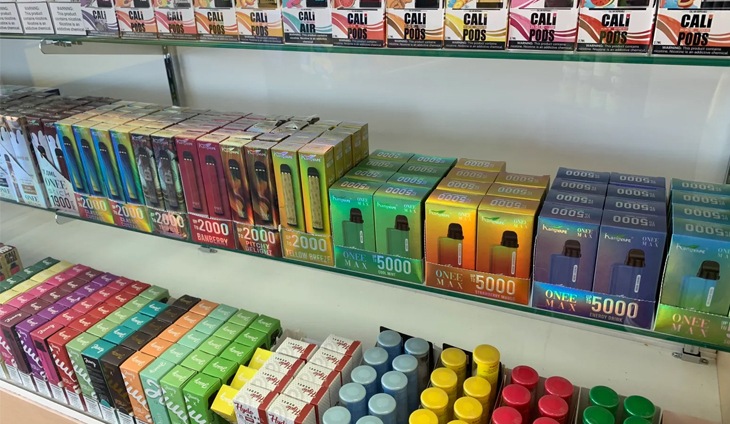
Recently, a well-known e-cigarette distributor revealed that the British government plans to announce the latest news on the ban on disposable e-cigarettes this Friday. In response, 2Firsts contacted David Lawson, CEO of Inter Scientific, a British testing agency, on the compliance of British e-cigarette products.
In January this year, the British government announced that it would completely ban the sale of disposable e-cigarettes and restrict the flavors of refillable e-cigarettes. Recently, a well-known e-cigarette distributor revealed that the British government plans to announce the latest news on the ban on disposable e-cigarettes this Friday (6th), including confirming that the ban will take effect on April 1, 2025. In response, 2Firsts contacted David Lawson, CEO of Inter Scientific, a British testing agency.
In response to 2Firsts' questions about e-cigarette compliance, David said that the draft clearly stipulates that refillable cartridge products are not restricted, and the device must have a charging function or a replaceable atomizer core. On a technical level, the product "can" be charged, and even if it cannot be used after charging (such as the battery is exhausted), it is not subject to regulations. At the same time, David observed that more than 80% of the e-cigarette products confiscated by UK law enforcement agencies were found to be non-compliant, "It is clear that consumers have a demand for such large-capacity products (usually characterized by more than 8 ml)".
The following is a specific Q&A between 2Firsts and David.
2Firsts: What do you think of the ban on disposable e-cigarettes that will take effect on April 1, 2025? What impact do you think this will have on the e-cigarette industry?
David: The current draft ban proposes to take effect from April 1, 2025. In fact, there are several drafts that reflect the same definition and restrictions for England and Wales, Northern Ireland and Scotland, with a total of three draft regulations covering the entire UK. This regulation follows a UK-wide consultation from October to December 2023, with the results announced on February 12, 2024. The draft ban has not yet been approved, but it will include a "lead-in" period of at least 6 months to give businesses a buffer period.
The draft will ban the sale of non-refillable/non-rechargeable disposable e-cigarette products, exclude refillable cartridge products, and require devices to be rechargeable or have replaceable atomizer cores. At the same time, the Tobacco and Related Products Regulations (2016) limit the oil storage capacity of cartridges and devices to 2 ml, which is a challenge for e-cigarette product manufacturers.
Since the draft was proposed a few months ago, UK products have rapidly innovated, including devices that combine several 2 ml cartridges or have removable 10 ml oil bottles for filling, to overcome the challenges posed by the regulations.
The e-cigarette industry has evolved since the "cigarette-style" devices, and we believe we will continue to see new solutions from leading e-cigarette brands to bring e-cigarette products into compliance with regulations.
Today, unfortunately many consumers do not dispose of e-cigarette products responsibly, and discarded disposable e-cigarette products can often be seen on the streets and around urban canals in the UK.
2Firsts: Do you think there are any misunderstandings or compliance issues with disposable e-cigarettes currently on the market? Is your company ready for the upcoming regulatory changes?
David: The main challenge we have seen in the UK and European markets over the past two years is the sale of illegal e-cigarette products that do not comply with TPD or TRPR (EU and UK regulations governing e-cigarette products). Most illegal products contain more than 2 ml of e-liquid per device, and these products have not been reported to European and UK regulatory authorities as required by TPD and TRPR.
Based on Inter Scientific's recent work, more than 80% of e-cigarette products seized by UK law enforcement agencies were found to be non-compliant. It is clear that consumers have a demand for such large-volume products (usually greater than 8 ml). Inter Scientific continues to support UK law enforcement agencies and manufacturers to ensure safe and compliant products are available on the UK market.
2Firsts: What challenges do you foresee in terms of compliance and enforcement after the ban comes into effect?
David: The draft bill brings several challenges to compliance.
First, the definition of disposable e-cigarette products is vague, and it is not clear whether a product with a charging port can be considered an exception, that is, whether adding a charging port to a disposable e-cigarette can enable the product to circumvent the regulations. Technically, as long as the product "can" be charged, it may not be restricted by the regulations even if it cannot be used after charging (such as the battery is exhausted).
In addition, almost all disposable e-cigarette products use rechargeable batteries (secondary batteries), although they do not contain charging circuits. By simply including a non-working USB charging port on disposable e-cigarette products, they may circumvent enforcement.
Therefore, in order for the draft regulations to be effective, the government must issue further guidance or standards to provide manufacturers with a way to demonstrate compliance so that manufacturers understand the exact definitions of the draft regulations.
I believe that e-cigarette manufacturers can innovate new designs that are more environmentally friendly and compliant. These changes may have a positive impact not only on UK consumers and the environment, but also across Europe and the Middle East.