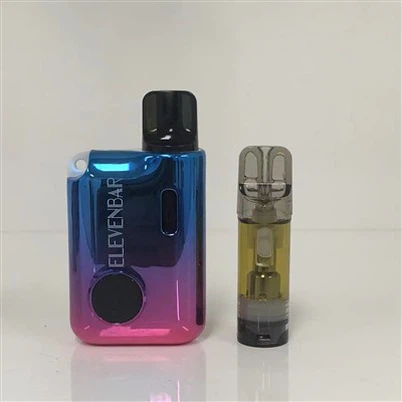
Professional terms related to electronic cigarettes
Leave a message
Compared with common names and colloquial expressions, technical terms are more precise and objective, and are commonly used in fields such as regulations, technical standards, scientific research, and industrial manufacturing.
Regulatory and Compliance Framework: Defining the "Structure" of the Industry
At the Global Level:
ENDS (Electronic Nicotine Delivery System): Refers to all devices that generate aerosol through electronic heating for human inhalation.
ENNDS (Electronic Non-Nicotine Delivery Systems): Devices of the same type that do not contain nicotine.
PMTA (Premarket Tobacco Product Application / Application for New Tobacco Products Before Market Entry): This is the application that the US FDA requires for new types of tobacco products to submit before they are allowed to enter the market.
MRTP (Modified Risk Tobacco Product ): Although these products are specifically permitted to make "low-risk" claims while being legally sold, the application process is extremely strict.
EU and national levels:
TPD (Tobacco Products Directive): The EU regulations concerning e-cigarettes (such as Article 20 of TPD), the core requirements include an upper limit of 2ml for e-cigarette cartridges, an upper limit of 20mg/ml nicotine concentration, as well as unified health warning labels and notification mechanisms.
HTP (Heated Tobacco Product): This includes "heated non-burning" (HNB) products, which are fundamentally different from electronic vaporizers (ENDS) in principle.
Sub-ohm / Sub-ohm Device (Low Resistance / Low Resistance Device): Generally refers to all vaping devices with a resistance lower than 1.0Ω. This is a common parameter limit indicator or label identification in regulatory compliance designs.
MSDS (Material Safety Data Sheet / Material Safety Data Sheet): A mandatory document that must be available in the electronic cigarette supply chain, serving as a technical manual for chemical safety.
CA Prop 65 / California Proposition 65 (California 65 Initiative): The labels must include warnings for all carcinogenic and reproductive toxic substances.
Technology and Manufacturing: Analyzing Hardware and Atomization Mechanism
Atomizer / Atomization Core: The core heating component that converts e-liquid into vapor.
Porous Ceramic Technology (): The mainstream oil-conducting heating technology for modern electronic cigarettes, featuring uniform oil conduction, barrier against un-volatilized tobacco juice, and resistance to dry burning, etc., with overall performance advantages.
Sensing Chip (Mouthpiece / Airflow Sensing Chip): A crucial miniature component in electronic cigarettes. Essentially, it is a MEMS capacitive pressure sensor that activates the heating circuit by sensing the negative pressure changes generated during smoking.
Battery & PCBA (Battery and Scheme Board): A circuit carrier that integrates all electronic components to achieve functions such as power management, charging control, LED indication, and safety protection.
PCB (Printed Circuit Board) / PCBA (PCB Assembly): Printed Circuit Board / PCB Assembly.
ASIC (Application-Specific Integrated Circuit ): An integrated circuit specifically designed to fulfill the functions required for electronic cigarettes.
Chemistry and Aerosol Science: Investigation of E-Liquid Components and Release Products
E-Liquid / E-Juice (Smoke Oil): A viscous liquid, mainly composed of propylene glycol (PG), vegetable glycerin (VG), nicotine, and food flavoring. When heated, it generates inhalable aerosols.
Carrier Solution / Humectant (Carrier Solution / Humectant): Refers to the two basic solvents, PG and VG, which are used to dissolve and carry nicotine and fragrance. They are also the main source of generating "fog".
Diacetyl / Acetylpropionyl (Double Acetyl / Ethylpropionyl): A compound found in some cream or butter flavoring agents.
Aerosol vs. Vapor (Airborne particles vs. Vapor): These are scientifically precise terms used to describe the emissions from electronic cigarettes. The key point is that they contain suspended liquid droplets, typically larger than 0.1 micrometers, which are different from the invisible pure vapor.
Carbonyl Compounds (Cycloalkene Compounds): A general term for a group of organic compounds that contain a carbon-oxygen double bond.
Metals / Inorganic Substances (Metal / Inorganic Substance): Some atomizers may release trace amounts of heavy metals when heated.
HPHC (Harmful and Potentially Harmful Constituents): Refers to the chemical substances present in the product or its aerosol that may cause direct or long-term health damage to the user.
TSNAs (Tobacco-Specific Nitrosamines): These are the result of nitrosation reactions of tobacco alkaloids. They are a specific type of strong carcinogen found in tobacco products.
Industry and Supply Chain: Brands, Contract Manufacturing and Standard Ecosystem
OEM (Original Equipment Manufacturer): Produces goods strictly in accordance with the designs, specifications, technologies and molds provided by the brand owner, without owning the design intellectual property rights.
ODM (Original Design Manufacturer ): Provides a complete finished product design plan. The brand owner only customizes the appearance, packaging, etc. of the product after making the selection, effectively shortening the project cycle.
OBM (Original Brand Manufacturer): A higher-level business model in the industrial chain, where manufacturers no longer undertake OEM (Original Equipment Manufacturer) services for customers, but instead directly operate their own e-cigarette brands.
IP (Intellectual Property / Intellectual Property Rights): This includes a variety of intangible assets such as product design drawings, technical plans, appearance patents, brand trademarks, etc. In OEM/ODM partnerships, there are clear and complex agreements regarding the ownership of these assets.
MOQ (Minimum Order Quantity / Minimum Order Quantity): This refers to the lowest quantity of each product that a manufacturer requires for maintaining efficient production.
UL 8139 / UL 8139 Certification (UL 8139 Standard / Safety Certification): This electrical system safety standard for electronic cigarettes and vaping devices was formulated and issued by global safety certification agencies. It has now been widely adopted in the North American and Canadian markets.
IEC 60335-2-120 (IEC 60335-2-120 Standard): A globally applicable international electrical safety standard for electronic cigarettes and similar vaporizing devices.
ISO 20768 (ISO 20768 standard / Smoke Gas Analysis Standard): A methodology and equipment standard for the standard collection and analysis of electronic cigarette aerosols.