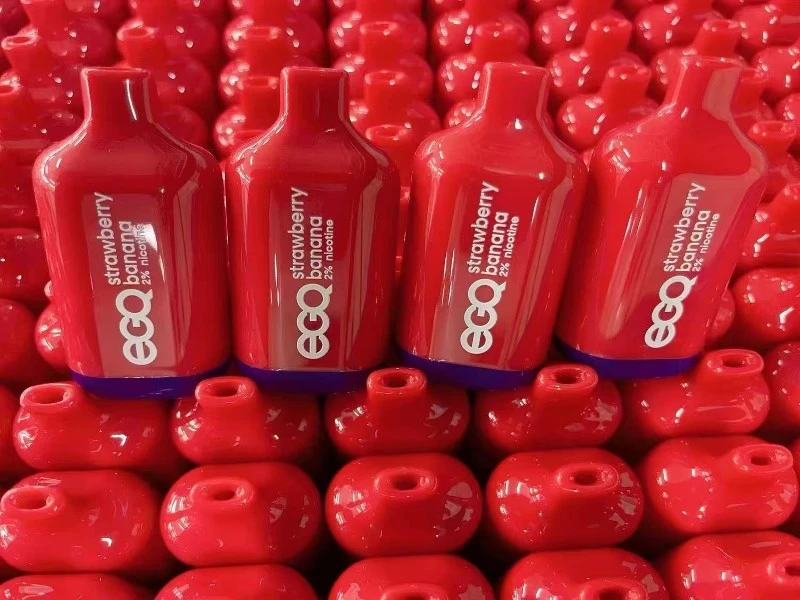
CBN vape
Leave a message
CBN (cannabichromene) e-cigarettes are a new category that has emerged recently in the "sleep aid" and "relaxation" markets. They belong to the same cannabinoid family as CBD and THC, but their core positioning is completely different: CBN is typically marketed as a non-psychoactive sleep aid option, yet its legal risks are just as severe as those of THC products. In China, it is explicitly classified as a drug.
What is CBN? How is it different from CBD and THC?
CBN is the product resulting from the oxidation and degradation of THC. This means it is usually found in aged cannabis. In terms of efficacy, it has a much lower affinity for CB1 receptors than THC, so it has relatively weak psychoactivity, but it is not completely zero. The core differences among the three are as follows:
Characteristic CBN (cannabichromene) CBD (cannabidiol) THC (tetrahydrocannabinol)
Main positioning Sleep aid, sedation Relaxation, anti-anxiety Serotonin activity, "high"
Serotonin activity Weak (may have a slight effect at high doses) No Strong
Legal risk (China) Drug, strictly prohibited Drug, strictly prohibited Drug, strictly prohibited
Main uses: Sleep and relaxation
The most prominent selling point of CBN is improving sleep. A study involving user research showed that among 325 users who used CBN due to sleep disorders, those who reported statistically significant symptom improvements after using it. Similar positive feedback was also observed in anxiety (186 users) and chronic pain. User reviews often describe CBN cartridges as helping to "fall asleep like a baby" and relieve pain. However, the current clinical research evidence is still limited, and its sleep aid effect has not been strictly confirmed by large-scale randomized controlled trials.
⚠️ Core health risks: Dual dangers to the lungs and the mind
The risks of CBN e-cigarettes come from two aspects: "the act of inhalation itself" and "the properties of the CBN substance".
1. Lung toxicity risk
EVALI association: Electronic cigarette products containing cannabinoid oils (including CBD, CBN) are closely related to the outbreak of EVALI (e-cigarette or vaping product-related lung injury). Studies have found that CBN, together with the pollutant vitamin E acetate (VEA) in the cannabinoid oils, can cause severe damage to airway epithelial cells and lipid accumulation.
Cell toxicity: Laboratory research has first confirmed that CBN itself has cytotoxicity to lung cells (A549) and exposure to a certain concentration of CBN significantly affects cell viability.
Respiratory irritation: CBN may be a respiratory irritant, and its potential symptoms include breathing difficulties, chest tightness, and pulmonary edema, which are common manifestations of EVALI patients.
2. Mental and central nervous system risks
Hallucinogenic risk (officially recognized by Japan): The Ministry of Health, Labour and Welfare of Japan concluded based on animal experiments that CBN is highly likely to cause hallucinations and other symptoms, and in June 2026, it was classified as a "designated drug", prohibiting production, sale, and possession.
Psychological toxicity controversy: The scientific opinion of the Japanese expert panel believes that CBN has the same or even stronger psychological toxicity as a designated drug. This conflicts with the perception of some users that CBN is "non-hallucinogenic".
⚖️ Legal status: Global tightening, clear red line in China
China: Clear legal red line
In China, THC, CBD, and CBN all fall under the category of drugs. Legal professionals clearly point out that CBN-containing e-cigarette oil is a drug. Purchasing such products online is suspected of being a crime of smuggling drugs. According to the Criminal Law, anyone who smuggles, sells, transports, or manufactures drugs, regardless of the quantity, should be held criminally responsible.
Overseas trend: Japan has completely banned it
The example of Japan is highly cautionary. Starting from June 2026, Japan has banned the production, sale, possession, and use of CBN. Those who violate the law face a maximum of five years in prison. Previously, biscuits, gummies and e-cigarettes containing CBN were legally sold as sleep aid products. However, due to serious health incidents such as students jumping off buildings after consuming them, the government eventually imposed strict regulations. Consumers were required to dispose of all products containing CBN before the new regulations took effect.
Market Brands and Products (Overseas Reference)
In regions where CBN is still legal (such as Canada), products typically appear as CBN+CBD THC-Free formulations, targeting nighttime usage scenarios.
NightNight (Full Spectrum CBN+CBD): THC-Free, the typical formula is 35%-45% CBN + 45%-50% CBD, combined with terpenes from Indian hemp varieties.
Potluck (Razzberry Bliss CBN): 1g disposable e-cigarette, approximately $35.99, mixed with raspberry flavor.
Heavy Hitters (Lights Out CBN): With a 3:1 CBN to Indian hemp ratio as the selling point, emphasizing rapid sleep aid effects.
Summary
CBN e-cigarettes are mainly for sleep aid and relaxation. Their psychoactivity is weaker than THC, but this does not mean it is safe or legal. Scientific evidence shows that inhaling CBN has clear lung cell toxicity and respiratory irritation risks, and is associated with the EVALI epidemic; Japan has completely banned it based on its hallucinogenic risk. The most important thing to realize is: In China, CBN, like THC and CBD, is also a drug. Any form of purchase, carrying or use will face severe criminal penalties, without exception.