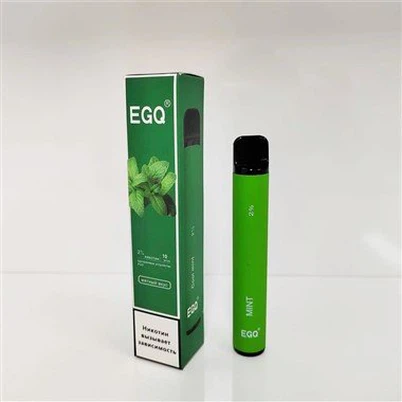
Are e-cigarettes safe?
Leave a message
Regarding the safety of e-cigarettes, the core conclusion is: E-cigarettes are not completely harmless, but the existing evidence indicates that, under the condition of completely replacing traditional cigarettes, their potential harm may be lower than continuing to smoke. However, "lower harm" does not equate to "safety"; it still has clear and diverse health risks. A key distinction is that for those who have never smoked, especially teenagers, starting to use e-cigarettes offers no safety benefits.
⚠️ Main health risks of e-cigarettes
The aerosol produced by e-cigarettes is not harmless water vapor; it is a complex mixture containing various potentially harmful substances.
Contains multiple toxic chemicals: A 2026 study systematically analyzed 1740 substances in e-cigarettes, of which 134 were classified as having the highest health hazard level, including carcinogens, mutagens, or reproductive toxic substances. These substances include carbonyl compounds such as formaldehyde and acetaldehyde, as well as heavy metals such as lead, nickel, and chromium. Flavoring agents such as diacetyl have also been found to have cytotoxicity, potentially weakening the defense capabilities of the respiratory system.
Direct damage to the respiratory system: Inhalation of these aerosols can damage the ciliary function of the respiratory tract, increasing the risk of chronic obstructive pulmonary disease (COPD) and asthma. A systematic review found that the risk of COPD in users of e-cigarettes was approximately half or more higher than that of non-users.
Cardiovascular system risks: Nicotine causes an increase in heart rate and blood pressure. Studies have also found that e-cigarettes with added synthetic coolants may trigger arrhythmias and increase cardiovascular risks. A 2026 study showed that e-cigarette use was associated with an increased risk of stroke (OR 1.25).
Potential carcinogenic risks: A 2026 review concluded that nicotine-based e-cigarettes "probably" have carcinogenicity for humans and may lead to oral cancer and lung cancer. Researchers observed clear precancerous lesions in the cells of the users' mouths and lungs. If traditional cigarettes and e-cigarettes are used simultaneously, the risk of lung cancer may be four times higher than using only traditional cigarettes.
Long-term impact on the brain development of teenagers: Nicotine has long-term negative effects on the developing brain (until approximately 25 years old). Exposure to nicotine by teenagers is associated with decreased working memory and attention, and reduced activity in the prefrontal cortex, and may increase the risk of future learning disabilities and anxiety disorders. Teenagers may develop dependence on nicotine faster than adults.
Relative risks: Comparison with traditional cigarettes
This is the core of the controversy over e-cigarettes. The evaluations by authoritative institutions vary:
Supporting the "reducing harm" view: The Royal College of Physicians in the UK and the National Academy of Sciences in the US, among others, believe that for smokers who completely switch to e-cigarettes, the harm is likely to be much lower than continuing to smoke. The Cochrane systematic review also pointed out that among the tested e-cigarette brands, the levels of toxic substances are far lower than those in cigarettes.
Questioning the "reducing harm" view: The World Health Organization (WHO) and other institutions emphasize that e-cigarette users still come into contact with a series of harmful substances and are associated with health risks such as cardiovascular and lung function disorders and DNA damage. A key question is that many smokers do not completely quit traditional cigarettes but use both (dual use), which may lead to risk accumulation.
Limitations of regulation and "compliance"
In China, e-cigarette products must comply with the mandatory national standard GB 41700-2022, which sets requirements for 12 indicators such as leak prevention, heavy metals, and release of carbonyl compounds. Recent spot checks in multiple regions have shown that the inspected products all meet these safety indicators.
However, it is necessary to clarify that "compliance with the national standard" does not equate to "safety". This standard mainly regulates the basic safety performance of the product and the limits of some known harmful substances, but it does not cover all potential harmful substances and cannot address the issue of long-term health impacts. For instance, among the 134 high-risk substances identified in a study, many may not be within the scope of current routine testing.
Summary
The "safety" of e-cigarettes needs to be viewed in different contexts:
For non-smokers (especially teenagers and non-smokers): They should not start using e-cigarettes. E-cigarettes have no safety benefits and only bring addiction and health risks.
For current smokers: If they completely quit traditional cigarettes and switch to e-cigarettes, this may be a relatively less harmful option. But the safest choice is always to completely quit all nicotine products.
For dual users: Using both traditional cigarettes and e-cigarettes simultaneously does not significantly reduce health risks and may even increase risks due to exposure to more harmful substances.