Special Report | If Trump Returns To Power: What New Changes May E-cigarette Regulation Face?
Leave a message
Special Report | If Trump returns to power: What new changes may e-cigarette regulation face?
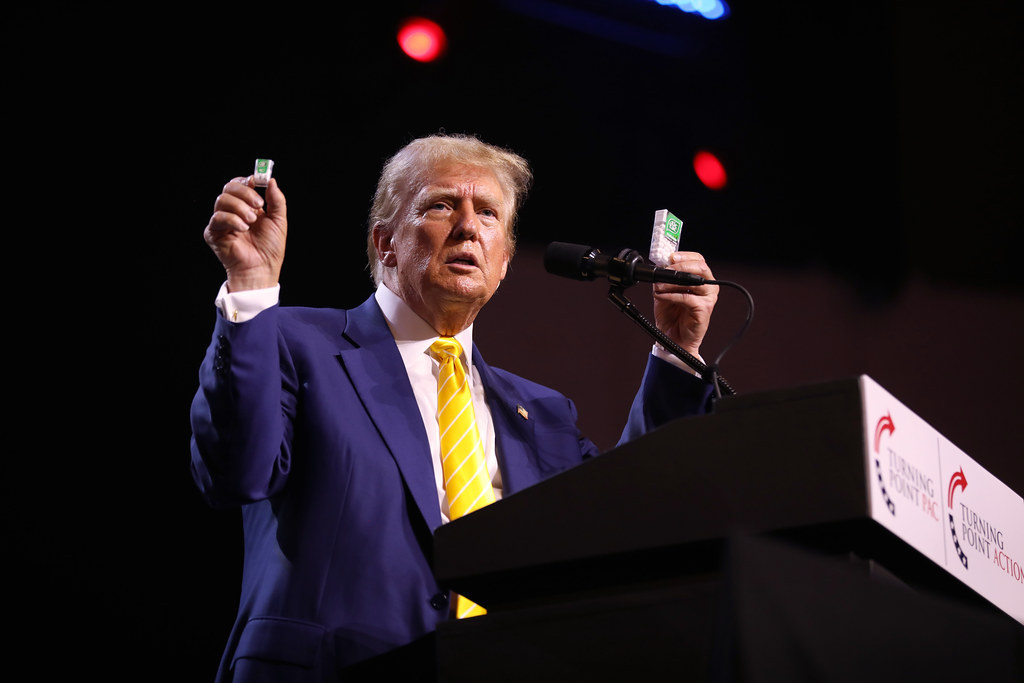
If Trump continues to maintain a slight lead, he may become president again four years after leaving the White House. Will this have various impacts on the e-cigarette industry? What is Trump's attitude towards e-cigarettes during his presidency? Two Supremacies Based on Trump's last presidency (January 20, 2017-January 20, 2021), the Trump administration's policies on e-cigarettes and his personal views have been sorted out.
On July 15, US time, the Republican National Convention kicked off in Milwaukee, Wisconsin, and former President Donald Trump was officially nominated as the Republican presidential candidate. Previously, Trump announced on his "Truth Social" platform that he had decided to choose Ohio Senator JD Vance as his vice presidential candidate.

Donald Trump (left) makes his debut with his running mate JD Vance at the Republican National Convention in Milwaukee | Source: Joe Raedle/Getty Images
They are facing the current President Joe Biden (Joe Biden) and Vice President Kamala Devi Harris (Kamala Devi Harris), and on November 5, Americans will vote for the new US President among them. According to the ABC News/Ipsos/Washington Post poll, Biden and Trump have a support rate of 46% and 47% among registered voters respectively.
If Trump continues to maintain a slight lead, he may become president again after leaving the White House for four years and become the second president after Stephen Grover Cleveland to be elected twice and for non-consecutive terms. What impact will this have on the e-cigarette industry? What is Trump's attitude towards e-cigarettes during his presidency? Based on Trump's last presidency (January 20, 2017 - January 20, 2021), the two supremes sorted out the Trump administration's policies on e-cigarettes and his own views.
Experience in dealing with the e-cigarette crisis
Trump did not pay attention to the e-cigarette problem at the beginning of his term, but by 2018, e-cigarette brands represented by JUUL were rapidly rising to occupy the market. Driven by these companies' flavored products and aggressive marketing strategies, the phenomenon of teenagers smoking e-cigarettes has increased significantly. According to statistics from the Centers for Disease Control and Prevention (CDC), by 2019, more than a quarter of high school students used e-cigarettes, and the surge in data was believed to be related to the appeal of flavors such as fruit, mint and menthol.
In mid-2019, the CDC began investigating an outbreak of lung injury associated with the use of e-cigarettes, namely EVALI (Electronic Cigarette or E-cigarette Product Use-Associated Lung Injury). The investigation found that many cases were related to the use of e-cigarette products containing tetrahydrocannabinol (THC), especially those obtained through informal channels. Vitamin E acetate, a thickening agent added to some THC products, is believed to be one of the main causes of lung damage.
The CDC, in collaboration with the FDA and state public health agencies, has issued warnings to avoid illegal e-cigarette products and certain ingredients.
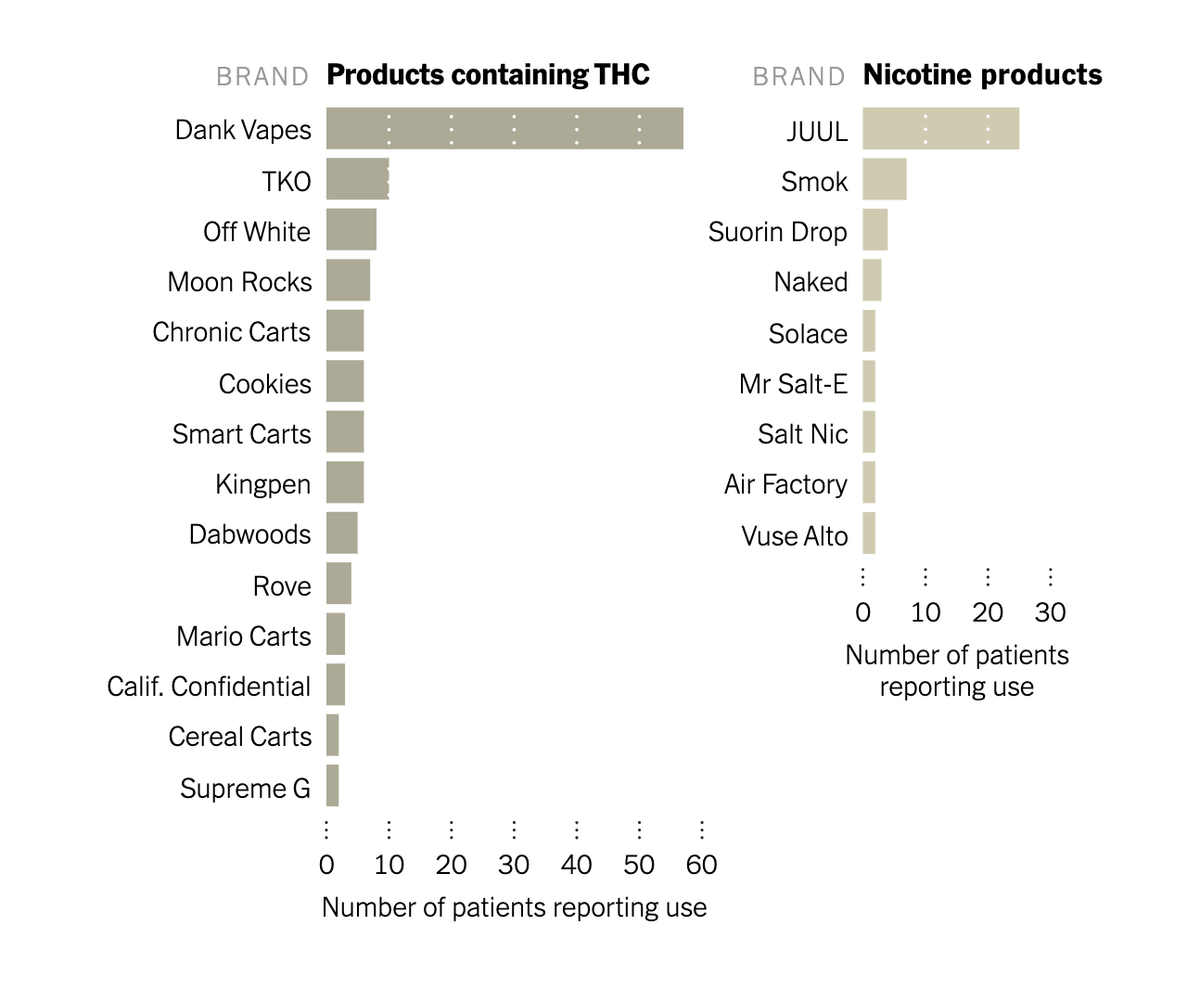
Number of patients reporting use | Source: New York Times
Although most of the above cases are related to vitamin E acetate, an additive in illegal marijuana e-cigarettes, the issue of e-cigarettes and adolescent addiction has become a health topic that the Trump administration needs to face, and curbing the proliferation of e-cigarettes among young people has become a top priority.
On September 9, 2019, the FDA first sent a warning letter to the monopoly e-cigarette JUUL, accusing the company of selling unauthorized modified risk tobacco products through labels, advertising and/or other consumer-targeted activities (including demonstrations to teenagers in schools).
FDA Acting Commissioner Ned Sharpless also warned the industry:
"If the use of e-cigarettes by teenagers continues to show a disturbing growth trend, especially through the use of flavors that attract children, we will take more aggressive action."
On September 11, 2019, Trump gave a speech announcing a plan to completely ban flavored e-cigarettes, citing the widespread phenomenon of teen e-cigarette use. And "there are growing concerns about an outbreak of lung disease linked to e-cigarettes." The New York Times reported that more than 50 people have died and more than 2,500 have been sickened by vaping.
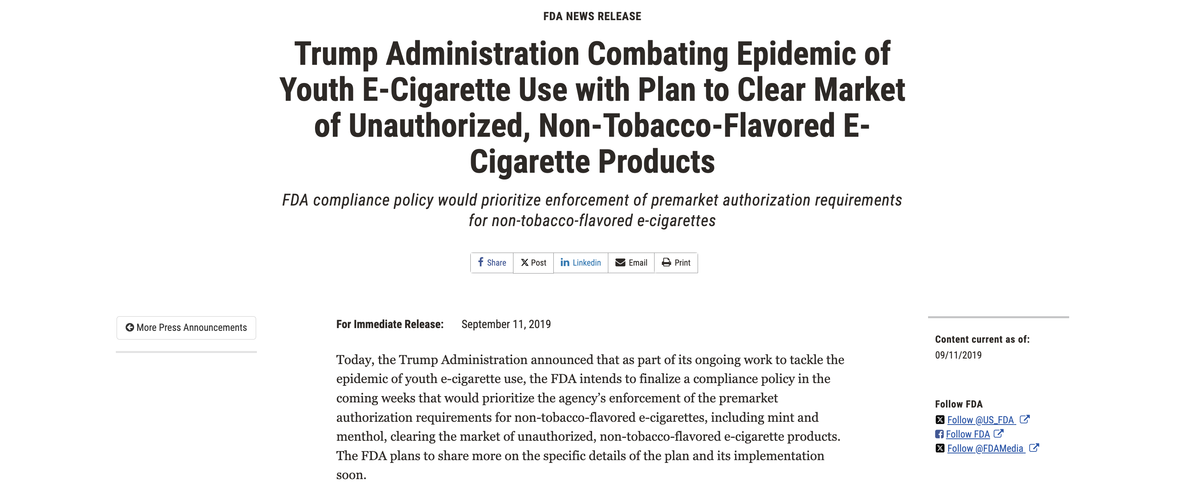
Trump said at the time, "We're going to have some very strict rules and regulations."
In the Trump administration's cabinet, Health Secretary Alex Michael Azar II supports a ban on flavored e-cigarettes to curb the widespread use of flavored e-cigarettes by teenagers.
On December 20 of that year, the president signed a bill amending the Federal Food, Drug, and Cosmetic Act to raise the federal minimum sales age for tobacco products from 18 to 21, and the minimum sales age applies to all retail establishments and individuals. The bill takes effect immediately, and it is illegal for retailers to sell any tobacco products (including cigarettes, cigars and e-cigarettes) to anyone under the age of 21.
But is a comprehensive ban on flavored e-cigarettes going to be implemented? The Trump administration is not trying to destroy the entire industry.
After he released his speech, Trump campaign manager Brad Parscale said that this (a comprehensive ban on flavored e-cigarettes) would damage his voter base, causing Trump to repeatedly hesitate whether to formally implement the ban.
Groups representing thousands of vape shops across the country quickly mobilized, launching a "We Smoke, We Vote" campaign against Mr. Trump on social media, hiring a pollster who had worked on presidential elections and even running a television ad in Palm Beach, Florida, home to Mr. Trump's Mar-a-Lago resort, The New York Times reported.
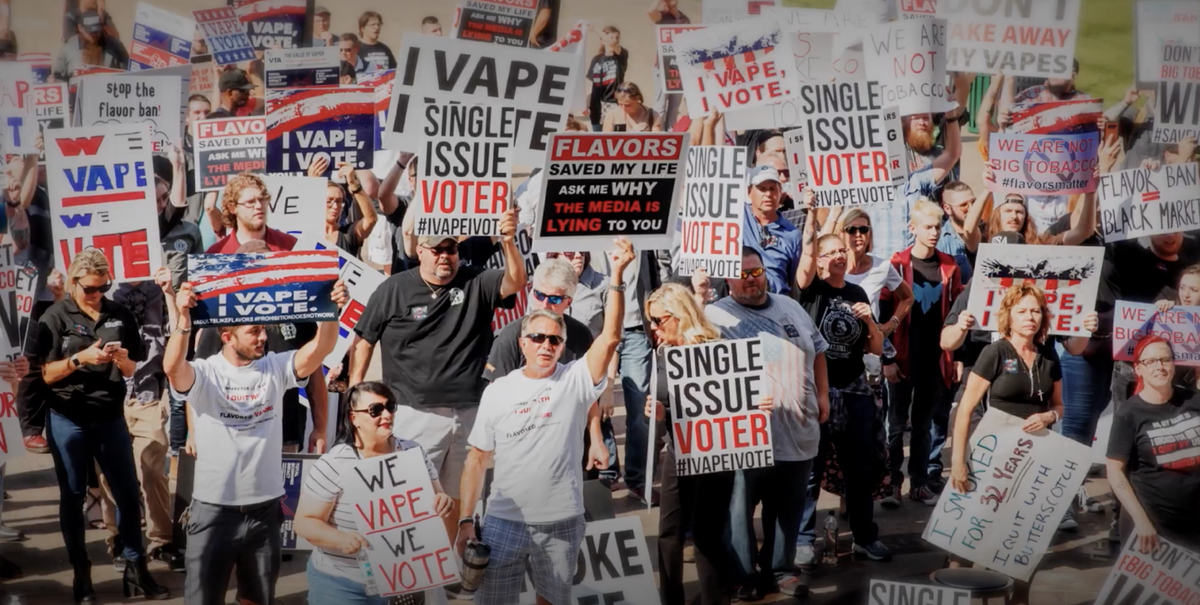
"We Smoke, We Vote" campaign | Source: Vapor Technology Association
Amid strong opposition from industry stakeholders, small business owners, and adult e-cigarette users who use e-cigarettes as a smoking cessation tool, the Trump administration scaled back the proposed ban.
The "FDA Finalizes Enforcement Policy for Unauthorized Child-Flavored E-Cigarettes (Including Fruit and Mint Flavors)" issued in January 2020 proposed cracking down on closed e-cigarettes with fruit and mint flavors, but not menthol and tobacco flavors. The FDA said that studies have found that menthol is much less popular among teenagers than other flavors, and flavored nicotine sold in e-cigarette stores in open tank systems is not subject to this ban.
This laid the foundation for the basic policy of the United States on flavored e-cigarette products from 2020 to date.
Trump: "I absolutely should not smoke e-cigarettes"
Although the "liberal media" such as the New York Times mentioned above are generally critical of Trump, emphasizing the controversial nature of his political tactics, legal issues, and personal behavior, and questioning his leadership and integrity. But objectively speaking, Trump himself neither drinks nor smokes. According to NBC, Trump declared himself a sober alcoholic before the 2016 election and said he had never drunk alcohol, smoked cigarettes or taken drugs.
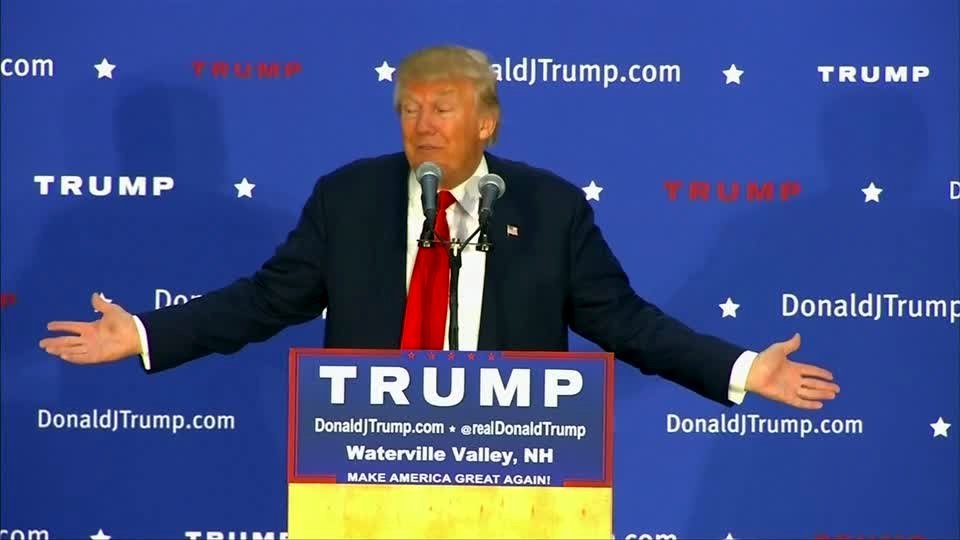
At a campaign event in New Hampshire, Trump said he does not smoke, drink, or take drugs | Source: Associated Press
When the Trump administration formally formulated the e-cigarette policy, he did not just issue a ban. He held a meeting and invited representatives from many parties to participate in the discussion, including medical experts, industry representatives, policymakers, and legislators.
In November 2019, before the policy was issued, in a speech on the issue of teen e-cigarette use and the prevalence of e-cigarettes, he showed his understanding of the complexity of the e-cigarette problem and expressed his willingness to formulate policies based on comprehensive discussions and evidence. During the exchange, Trump repeatedly emphasized the importance of protecting teenagers in the meeting.
"While e-cigarettes may be a substitute for adult smokers, we cannot let them become the starting point for nicotine addiction and traditional tobacco use in youth... We have to take care of our children. We have to take care of our children."
At the same time, it was mentioned that e-cigarettes may be an auxiliary tool for adult smokers to quit smoking,
"You know e-cigarettes, you can stop smoking (cigarettes), which is better."
But also asked about the regulation of the e-cigarette industry, including product standards and safety, and his concerns about the illegal market that may emerge after banning e-cigarette flavors,
"But if it's not Reynolds Tobacco or JUUL or you know, legitimate companies, good companies making safe products, they will be selling things that may be bad on the street corner."
Despite discussing a variety of views and possible solutions, Trump did not make clear his final position at the end of the exchange, but said that the government's decision would be announced soon.
On January 17, 2020, after the release of the enforcement policy on e-cigarettes, the New York Times quoted three people familiar with the matter as saying that Trump severely criticized Azar II, and Trump picked up the phone on his desk and said, "I absolutely should not smoke e-cigarettes," and added a swear word.

U.S. Secretary of Health and Human Services Alex M. Azar II and Trump at the White House | Source: The New York Time
Some media, such as commentators from the New York Times, believe that Trump's revised position reflects his broader economic priorities, emphasizing the need to protect small businesses and jobs in the e-cigarette industry. He advocates a balanced approach that takes into account both public health and economic impacts.
In response to this matter, White House spokesman Judd Deere said:
"We are committed to implementing the president's policies to improve the U.S. healthcare system so that everyone can benefit from it, not just individuals."
Trump himself said:
"We will protect our families, we will protect our children, and we will protect this industry," and pointed out that some products may return to the market "soon."
After the release of this enforcement policy, associations and organizations that have been paying attention to this matter still believe that the policy is "reserved." For example, organizations such as the American Medical Association (AMA) have called for stricter regulations, including a complete ban on the use of flavored e-cigarettes that are not approved by the U.S. Food and Drug Administration as a smoking cessation tool.
Law enforcement may continue to be strengthened
If Trump wins this year's election and successfully returns to the White House next year, his impact on the US e-cigarette industry may continue to balance public health issues and economic interests.
Two Supremes communicated with SKY, an observer who has long been paying attention to the US e-cigarette market, on this issue. SKY believes that the core contradiction of e-cigarette regulation in the future is no longer the FDA's view on flavors, but the law enforcement issues of the US Department of Justice (DOJ), the US Food and Drug Administration (FDA) and the US Customs and Border Protection (CBP).
"After Trump takes office, the law enforcement of the Department of Justice and Customs will be strengthened, so it is certain that he will increase the intensity of law enforcement."
He believes that Trump attached great importance to the work in the fields of trade circulation and combating smuggling in his last term, and as a leader who is keen to "withdraw from the group", this may lead to a more closed US market. He said that brands and OEMs are adjustable variables, but the demand in the e-cigarette market will not disappear, so the dealer channel will become more important.
"Whoever has the channel will win the game."
Trump may also make a fuss about tariffs, which is very similar to the trade disputes he initiated in his previous term.
Another variable is his new partner. Trump has announced JD Vance, the vice presidential candidate. Although Vance, who will become a senator in 2022, has not discussed the e-cigarette issue in detail in public, his attitude towards the e-cigarette issue can be inferred based on his position on other public health and policy issues.
Politico, a political media, said that Vance has always emphasized the importance of public health. He has used this to criticize the Biden administration's weakness on drug issues, especially its severe crackdown on drugs and substance abuse. He emphasized the serious impact of the fentanyl crisis on the community, which is also an important issue for cooperation between major countries.
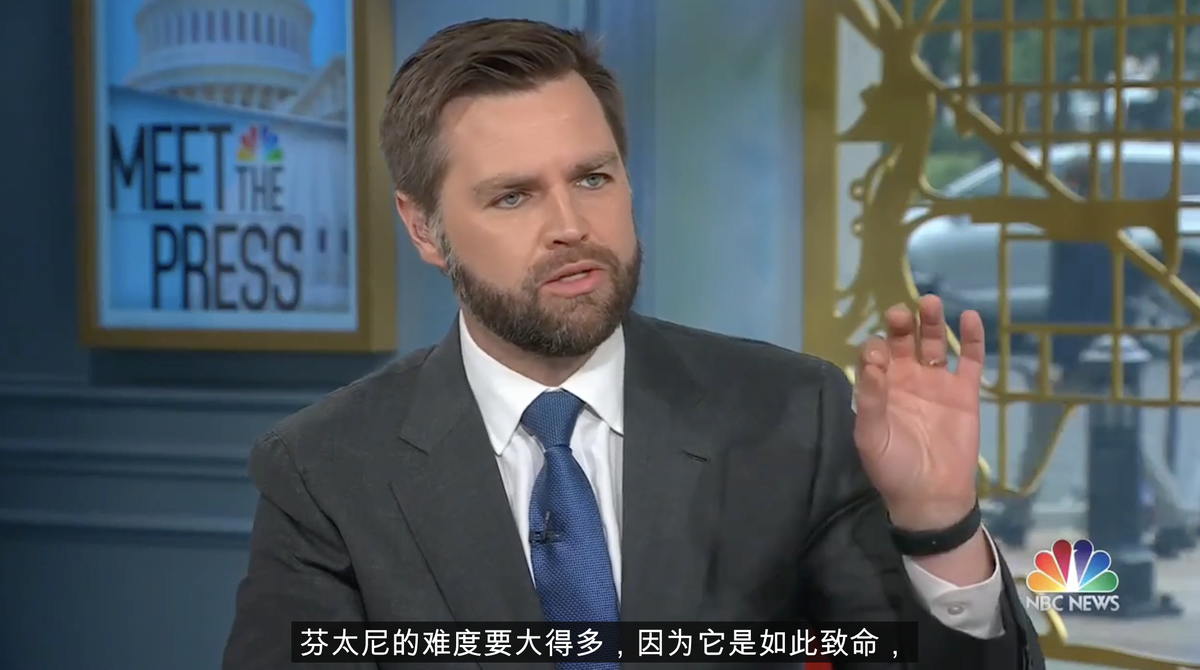
Vance is a guest on NBC to talk about the fentanyl issue | Source: NBC
He said in a blog show:
"I really don't care what happens in Ukraine. What I really care about is that in my community, the main cause of death among people aged 18-45 is fentanyl flowing in from the southern border."
Therefore, Vance supports strengthening law enforcement to solve social problems, including illegal drugs and drug smuggling. He supports the construction of a border wall as a key measure to stop the flow of these substances, and he also proposed spending $3 billion to complete Trump's wall.
Combined with his overall policy views, SKY believes that Vance may support strict regulation and law enforcement because he is a politician who is "highly conservative on drugs, marijuana and other issues." When the e-cigarette issue becomes the focus of attention, Vance may also propose similar solutions.
It is worth noting that even if Trump can finally come to power, e-cigarette regulation is different from his first term in 2017. The entire market, regulation and product form are changing, and the most popular e-cigarette type has changed from JUUL's cartridge-changing products to disposable products.
During Biden's term, the US FDA's regulation of e-cigarettes has been criticized by all parties, and the FDA Tobacco Center had to introduce a reform plan to deal with the investigation, and the original PMTA review period is still slow.
It was also this year that the menthol e-cigarette, which had been rejected many times, was approved by the FDA for the first time. The e-cigarette industry generally believes that this is a positive signal: the official recognition of menthol flavors will open up growth space for compliant companies.
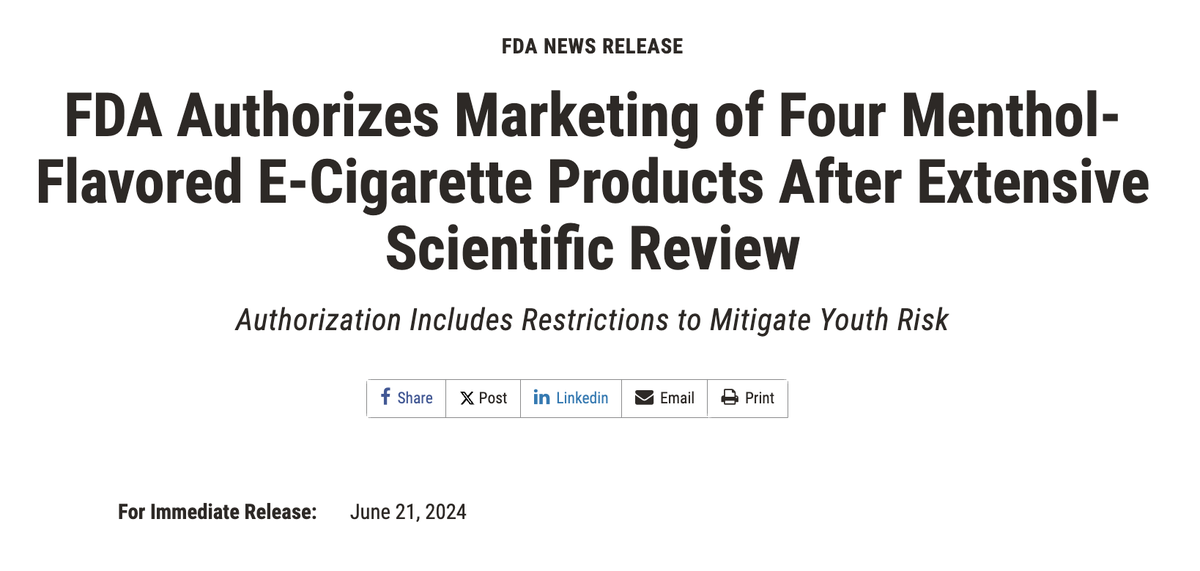
FDA approves four menthol e-cigarettes for the first time | Source: Two Supremes
Therefore, this election will not only be a choice between two candidates, but also a major decision on the future policy direction. The combination of Trump and Vance will undoubtedly bring tough law enforcement and a commitment to protect the economy, especially on drugs and e-cigarettes.
Regardless of the outcome, the US e-cigarette market will inevitably experience more changes and challenges in the next few years. It's just that the possibility of Trump returning to the White House makes this election particularly eye-catching. History may once again witness the return of a former president, and the flapping wings of a butterfly will also set off a storm in China across the ocean at some point, which will profoundly affect the future direction of the industry.