

Reader Contribution: The Rise Of Shisha: From Middle Eastern Cafés To A Global Popular Tobacco Product
Leave a message
Reader Contribution: The Rise of Shisha: From Middle Eastern Cafés to a Global Popular Tobacco Product
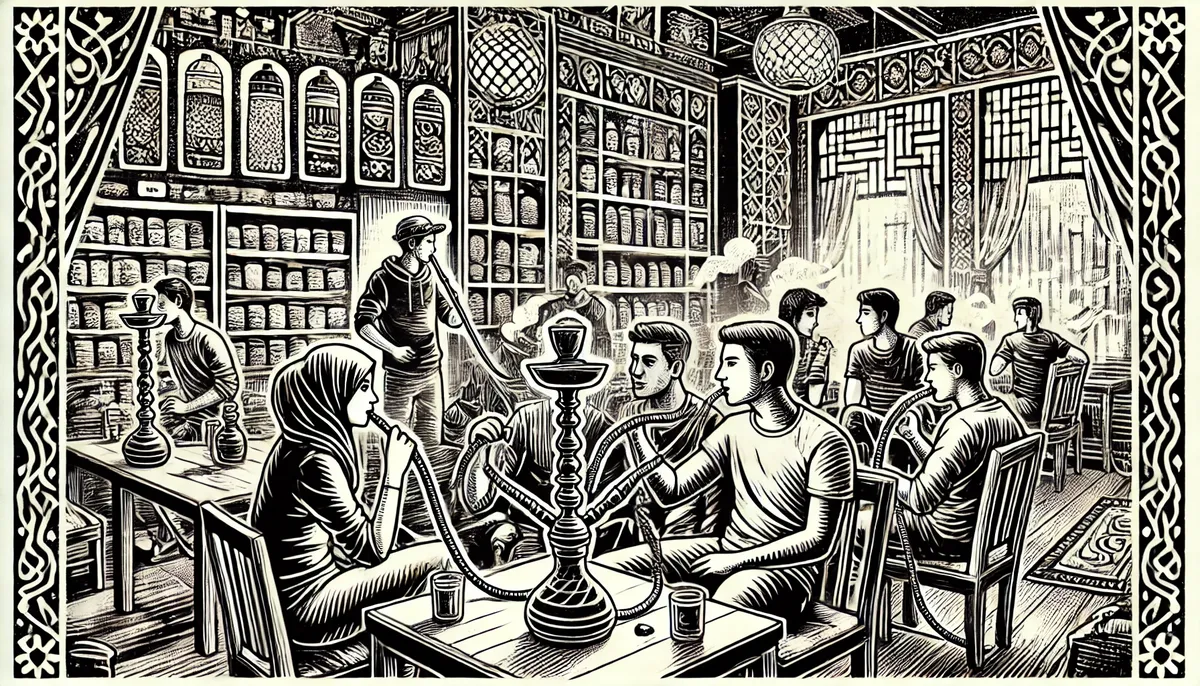
Market analysis firm Valuate also estimates that the global market for hookah tobacco products remains concentrated in the Middle East and Africa. They say the second largest market share is held by Europe. Valuate estimates that the global market for hookah tobacco products will be worth more than $800 million in 2022 and predicts that the market will nearly double by 2029.
Special note:
1. This article is a reader contribution and has been edited to meet reading needs. The views expressed in the article only represent personal positions and do not represent the positions of the two supremes.
2. The two supremes forward this article to convey information, not to endorse or support its content.
3. The two supremes have obtained the author's authorization to publish. Readers should pay attention to its accuracy, completeness, reliability, and be cautious about the views and suggestions contained therein.
Waterpipe has different names in different countries, such as narghileh, shisha, hookah, hubble-bubble, and bong.
The World Health Organization (WHO) defines waterpipe smoking (WTS) as "a method of tobacco consumption in which flavored or unflavored tobacco is smoked using a single or multiple pipes, with the smoke passing through water or other liquids before reaching the smoker." Some countries have their own definitions of waterpipe.
The origins of WTS are unclear. It was popular among older men in the Middle East in the late 19th century, but with the introduction of sweet and flavored tobacco in the early 1990s, WTS quickly became popular among young people and spread globally through universities and schools.
As "café culture" developed in the Middle East and around the world, the social acceptance of waterpipes continued to increase, and waterpipes in cafes, restaurants and bars became the focus of social gatherings for young people, as groups of friends could share a waterpipe for long periods of time and smoke slowly. Tourists brought the waterpipe habit back to their countries, and expatriates from the Middle East opened waterpipe cafes and restaurants around the world. In this way, waterpipes spread beyond the Middle East and integrated into the global tobacco market. While other regions have restrictions on tobacco advertising, products have been promoted throughout the Middle East through satellite TV, the internet, and social media. As these media are largely unregulated, the industry is able to circumvent most advertising bans.
Multinational tobacco companies' layout
Historically, multinational tobacco companies have shown little interest in hookah tobacco products. A review of tobacco industry documents shows that, with the exception of a few "hooch-inspired" products that did not become mainstream, tobacco companies have not focused on hookah tobacco and its accessories.
This situation continued until 2012, when Japan Tobacco International (JTI) acquired the Egyptian company Al Nakhla. At the time, Al Nakhla was the world's largest manufacturer of hookah tobacco products. However, even then, this was considered a strategy to increase cigarette sales.
In 2019, Philip Morris International (PMI) applied for a patent for a "hooch-inspired device for heating a substrate without combustion." However, as of 2023, the product has not yet been launched on the market.
How hookahs are used
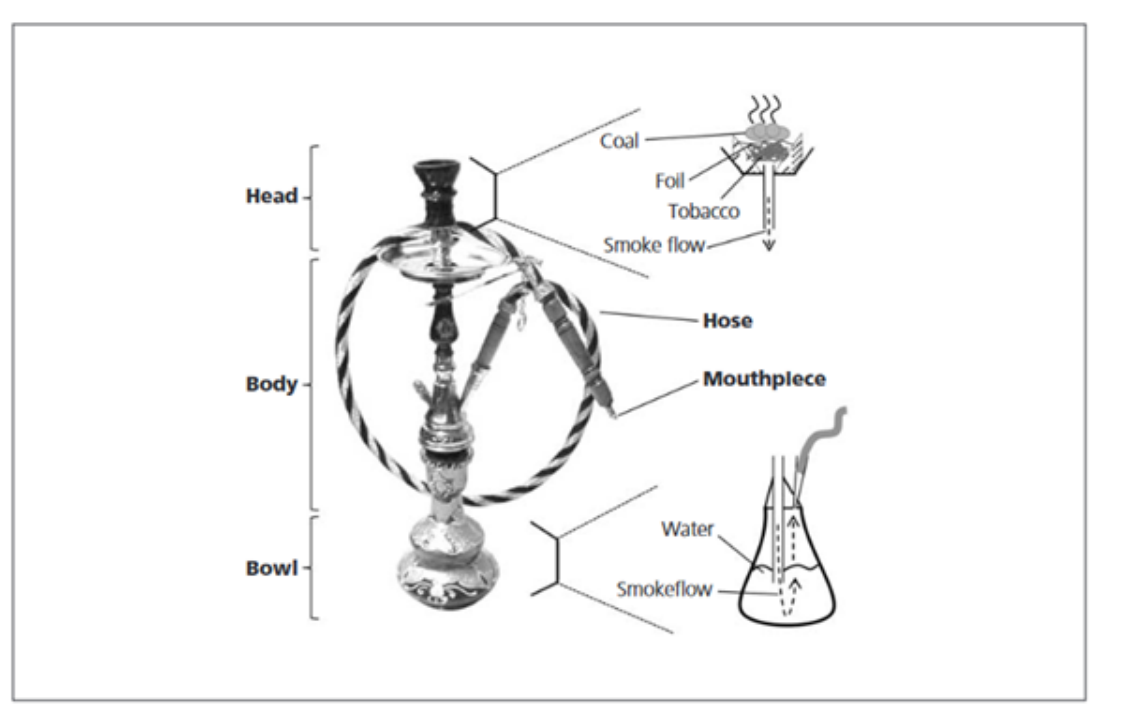
When smoking a hookah, a device such as the one shown in Figure 1 is used. When the smoker draws air from the mouthpiece, a lit piece of charcoal heats the hookah leaves inside the head of the device. This heat creates smoke, which travels through the body of the device and into a bowl filled with water. The smoker draws air through a hose connected to the top of the bowl, drawing the smoke into the water, creating bubbles, and finally inhaling the smoke through the mouthpiece. Typically, the head is filled with flavored and sweetened tobacco, separated from the charcoal by a perforated aluminum foil. While the specific design and features may vary by region, the basic principle is always the same: the smoke is filtered through water.
Electronic hookahs or electronic hookah pens are not hookah devices because they do not involve burning charcoal. They are classified as electronic nicotine devices, similar to electronic cigarettes, in which a sweetened liquid is electrically heated to produce an inhalable aerosol.
The role of flavors
Traditionally, hookah tobacco (WT) uses unflavored tobacco leaves (Ajami, Tumbak, or Jurak). However, since the 1990s, flavored tobaccos have become increasingly popular.
The most common type of WTS flavored tobacco is Maasel (or Mo'assel), or "honey" tobacco, which is composed of one-third tobacco and two-thirds honey and fruit flavors, usually a mixture of tobacco, molasses (a thick syrup made from raw sugar), glycerine, and fruit flavors. A study of Lebanese adults showed that the introduction of new tobacco flavors prompted people to start WTS and increased their use. Similarly, a study in Iran showed that a variety of "tempting" flavors led to increased WTS use among adolescents and women.
In addition, a British study found that people mistakenly believe that tobacco smoke is safer than cigarettes "because it has a pleasant smell and fruity taste."
Health Effects
There is evidence that hookah is addictive, just like other tobacco and nicotine products.
Like cigarettes and tobacco, hookah is toxic and carcinogenic. One study found that hookah smoke contained 27 known or suspected carcinogens. Because hookah is often shared, it is also a mode of transmission of infectious diseases, which is particularly worrying during the COVID-19 pandemic. As a result, waterpipe smoking has both short-term and long-term health effects on users, as well as harm to those exposed to secondhand smoke.
Many user groups believe that waterpipe smoke is less harmful than cigarettes because it is filtered through water. This belief has contributed to the growing popularity and acceptance of waterpipe smoking.
However, waterpipe contains similar or more levels of toxicants as cigarettes, and can cause the same effects on cells as conventional products, including lung and arterial disease.
Market penetration
A 2018 systematic review of 129 studies from 68 countries found that WTS was highest in adults in the Eastern Mediterranean Region (EMR). However, among young people, use rates were similar in Europe and the EMR. Comparing WTS in adults and young people, the study showed that globally, smoking rates are higher among young people.
The World Health Organization published a consultation on WTS in 2015, noting that although WTS was traditionally associated with the Eastern Mediterranean Region, Southeast Asia, and North Africa, WTS has begun to spread among adults of both sexes worldwide. In addition, the WHO also noted that WTS has grown particularly rapidly among primary, secondary and university students.
Laws and Regulations
In many high-income countries, waterpipe products are not subject to tobacco control policies. In many low-income countries, even if policies exist, enforcement is weak. Although flavoring is a major factor in attracting young people, flavoring bans generally do not cover waterpipe tobacco products. As a result, the growth of WTS worldwide has been largely uncontrolled.
The World Health Organization Framework Convention on Tobacco Control (WHO FCTC) defines tobacco products as "products made wholly or partly from tobacco leaves for smoking, sucking, chewing or snuffing." This definition covers waterpipe tobacco products. The WHO Framework Convention on Tobacco Control issued a COP decision specifically for waterpipe tobacco control:
At the third Conference of the Parties (COP3) in 2008, Parties were invited to consider introducing health warnings and messages on tobacco packaging (including waterpipe packaging) and taking innovative measures to require health warnings and messages to be printed on tools used to smoke waterpipes.
In 2014, the Sixth Conference of the Parties (COP6) invited Parties to strengthen the implementation of the WHO FCTC on waterpipes, including monitoring their use and conducting research on their markets. The decision also invited the Convention Secretariat to work with the WHO to support countries in regulating waterpipes.
The Seventh Conference of the Parties (COP7) in 2016 provided more detailed instructions to Parties, including a ban on the use of flavorings in waterpipe products.
The Eighth Conference of the Parties (COP8) in 2018 made decisions on the implementation of Articles 9 and 10 of the Convention (regulation of content and disclosure of tobacco products, including waterpipe, smokeless tobacco and heated tobacco products), including the establishment of an expert group to study the reasons for the low implementation of Articles 9 and 10 of the Convention.
In January 2016, the Secretariat of the WHO FCTC signed a Memorandum of Understanding with the American University of Beirut, making it a global knowledge center of the WTS, especially in education, research and dissemination of information that will help implement the Convention.
In 2018, the WTS Knowledge Hub presented a report to the 8th Conference of the Parties to the WHO FCTC summarizing Parties' regulations on waterpipe use. The report, updated in 2022, found that more than half (47) of the 90 countries reviewed had policies in place related to waterpipe use. Most of the policies (nearly 45%) were in Europe, with about 21% in the EMR.
During the COVID-19 pandemic, many countries temporarily banned waterpipe use to stop the spread of the virus. In the EMR region alone, 17 countries banned waterpipe use in public places.
Both waterpipes and heated tobacco products are exempt from the EU flavoring ban set by the 2014 European Tobacco Products Directive (TPD) and implemented in 2020. A new directive was published in 2022 and will come into force in 2023. The directive removes the exemption, bringing the regulation of these products in line with cigarettes and hand-rolling tobacco. This means that waterpipe tobacco with "characteristic flavors" will no longer be legally sold in the EU.
Hookah Market
Advocacy group It's Still Tobacco estimates that between 54% and 69% of global hookah tobacco products were sold in the Middle East and Africa (MENA) between 2016 and 2017.
Market analysis firm Valuate also estimates that the global market for hookah tobacco products remains concentrated in the Middle East and Africa. They say the second-largest market share is held by Europe. Valuate estimates that the global market for hookah tobacco products was worth more than $800 million in 2022 and predicts that the market will nearly double in size by 2029.
Market research firm Euromonitor International estimates hookah product sales only as part of the broader pipe tobacco category, making it difficult to estimate global market share specifically for hookah tobacco. However, specific hookah brands can be identified in the data. In 2022, JTI and Al Nakhla held the largest share, accounting for nearly 13% of the total pipe tobacco market, followed by Al Fakher and Eastern brands (including Moassel), with around 12% and 8%, respectively.


