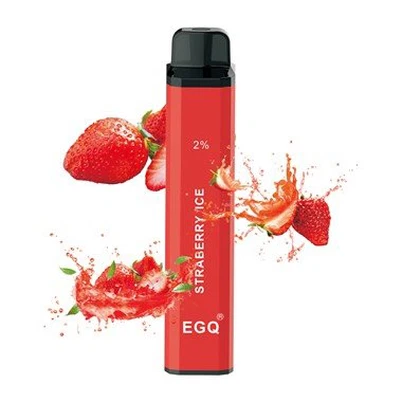
Poland Plans To Completely Ban E-cigarettes in An Effort To Protect Teenagers.
Leave a message
According to the Strefabiznesu news report on November 19th
The Polish government is advancing a new regulation aimed at completely banning disposable electronic cigarettes, which has drawn widespread attention from the industry, the medical community, and public health organizations. The Ministry of Health has begun collecting opinions on the bill, covering the ban on the sale of all nicotine-containing or nicotine-free disposable electronic cigarettes, and plans to incorporate other new nicotine products (such as nicotine pouches, sprays, gum, etc.) into a stricter, similar-to-drug regulatory system.
The government emphasizes that this move is mainly to prevent teenagers from being exposed to nicotine too early and to reduce the environmental pollution and health risks caused by disposable electronic cigarettes. The Ministry of Health points out that these products have become the focus of regulation due to their "attractive packaging, high addiction risk, and difficulty in recycling".
The medical community and pharmacists support the ban, but they request "to retain adult alternative options". Although the medical community generally supports the ban on disposable electronic cigarettes, doctors and pharmacists both emphasize that it is necessary to avoid "completely eliminating all nicotine alternatives" to prevent adult smokers from reverting to less risky products.
Lung doctor Katarzyna Kołcz wrote in a letter to the Ministry of Health that disposable electronic cigarettes are indeed necessary to be strictly controlled because of their design and marketing methods that are more likely to attract teenagers. At the same time, pharmacists called for in an open letter that while the government limits disposable products, it should still ensure that nicotine pouches and other non-burning products are available to adult smokers, as they have similar pharmacological characteristics to nicotine replacement therapy (NRT) and are beneficial for reducing the harm of smoking.
Experts call for the establishment of a national "harm reduction" strategy, rather than a one-size-fits-all approach. The medical community generally advocates that future policies should combine strict control + tobacco harm reduction (harm reduction), including:
Continuously providing regulated nicotine-free products for adults, conducting unified testing and labeling of product ingredients and nicotine content, retaining a small amount of "functional flavors" (such as mint) that are not attractive to teenagers, formulating a national anti-smoking strategy, drawing on the experiences of Sweden, the United Kingdom, and New Zealand.
Experts emphasize that international cases have proven that providing low-risk alternatives under strict regulation can effectively reduce smoking rates and prevent adult smokers from returning to the cigarette market.
Civil organizations have publicly written to the president: requesting an "open and science-based" debate on nicotine policies. The harm reduction organization Jump 93 has written to the president Karol Nawrocki, calling on the government to host an open debate to examine the impact of a complete ban on sales. The organization points out that current public discussions generally confuse traditional cigarettes with nicotine-free products, causing policy discussions to deviate from scientific basis.
The organization's president Jacek Charmast emphasized: "The lack of an open debate will ignore scientific voices and misinterpret strategies to reduce smoking harm. Effective public policies should protect minors while also providing realistic exit paths for addicted individuals."