

In-depth | Double Blow Of High Taxes And Bans, Is Poland's Ban On The Sale Of Disposable E-cigarettes A Foregone Conclusion?
Leave a message
In-depth | Double blow of high taxes and bans, is Poland's ban on the sale of disposable e-cigarettes a foregone conclusion?
Poland has 8.4 million adult smokers. As a smoking cessation alternative to traditional tobacco, e-cigarettes have developed actively in Poland. What e-cigarette brands are currently on the Polish market? Why has the Polish government's attitude towards disposable e-cigarettes deteriorated? Why is there a temporary compromise now? What role do international tobacco companies play?
In February 2024, Wojciech Konieczny, Deputy Minister of Health of Poland, said that the sale of disposable e-cigarettes may be banned before the summer vacation. Until July, the Polish government announced that it planned to pass a draft amendment to the Health Protection Act on the Consequences of Using Tobacco and Tobacco Products in the third quarter, with the aim of prohibiting young people under 18 from using e-cigarettes.

Wojciech Konieczny, Deputy Minister of Health of Poland | Source: czestochowa
The Polish Ministry of Health said that these products pose a clear threat to public health, so it is necessary to ban the sale of all types of e-cigarettes and refill containers to people under the age of 18, regardless of whether the specific product contains nicotine.
Compared with the "ban on the sale of disposable e-cigarettes", the "nicotine-free sales ban" proposed by the Polish government for minors seems to be thunder and rain. According to the Ministry of Health, stricter "ban" legislation will be delayed until next year due to the EU's review. The Polish Market Monitoring Center pointed out that the market share of "zero nicotine" e-cigarettes is very small, and most of the sales are nicotine-containing products. The new proposal of the Ministry of Health only solves part of the problem.
Poland, the sixth largest economy in the European Union and one of the best performing economies in Eastern Europe, has a long history of cigarette use. The latest data shows that the country's smoking rate is about 26%, and about 8.4 million adults are smokers. In contrast, the average smoking rate in the European Union is 19.7%. As a smoking cessation alternative to traditional tobacco, e-cigarettes have developed actively in Poland. What e-cigarette brands are currently on the Polish market? Why has the Polish government's attitude towards disposable e-cigarettes deteriorated? Why is it temporarily compromised now? What role do international tobacco companies play?
A huge market that has been ignored
According to the e-cigarette export data of China Customs in 2023, Poland ranks 14th among China's e-cigarette export destinations, with an export value of US$180 million, ranking after the UAE and before France. However, the potential of the Polish e-cigarette market has long been underestimated.
With the improvement of health awareness and the increase in the demand for smoking cessation, more and more Poles have begun to accept and use e-cigarette products. As a member of the European Union, its basic e-cigarette management policy comes from Chapter 20 of the EU Tobacco Products Directive (TPD), and the relaxation of supervision provides favorable conditions for the further development of e-cigarette products.
EU Tobacco Products Directive (TPD) | Source: sweetch
While e-cigarette consumption is growing, its domestic traditional cigarettes are also declining in line with the global trend.
Poland, together with Italy, Spain, Greece and other countries, accounts for 99% of the EU's tobacco production. The country's tobacco products are known for their low prices, but now low prices are also facing challenges. Consulting firm Euromonitor International calculates that Poland's cigarette sales will fall by less than 1% in 2023, while price increases lead to value growth. While cigarette product sales are declining, Euromonitor International analyst Lina Sidorenke believes:
"Electronic cigarette products, heated tobacco products and nicotine bags show significant growth in demand." She also said that "closed system disposable devices have become the biggest winners with the strongest growth in 2023."
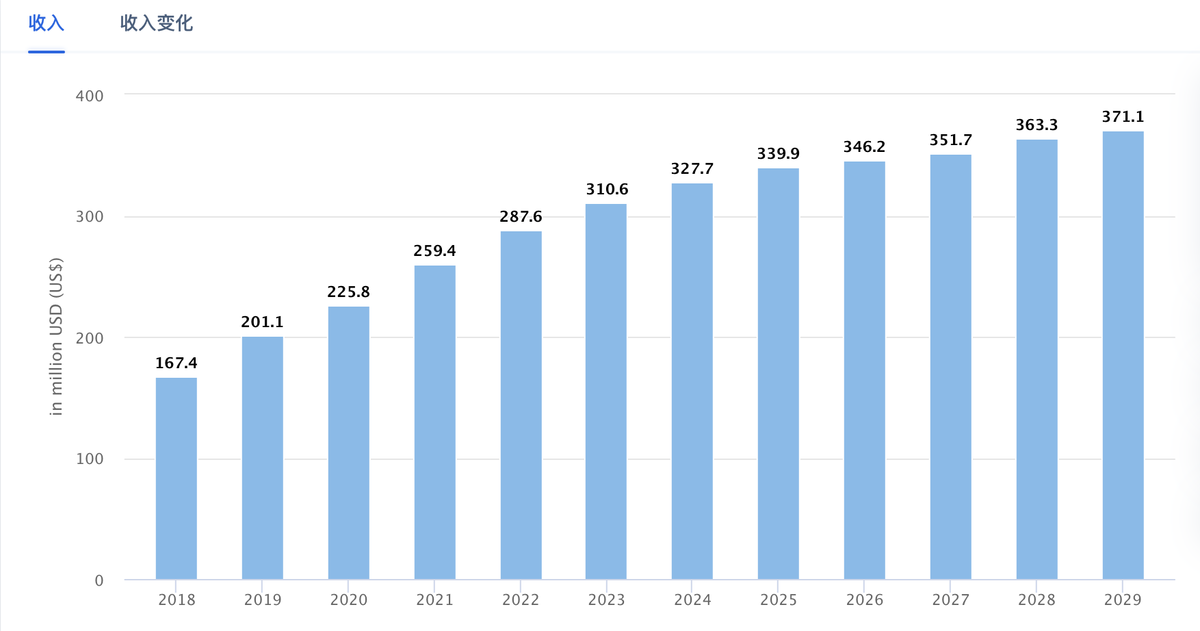
Another research institution, Statistic, predicts that the revenue of the Polish e-cigarette market will reach US$327.7 million in 2024.
Emerging markets have spawned products and brands, such as AROMA KING, a disposable e-cigarette brand headquartered in Warsaw, Poland, whose products have gained a lot of popularity in markets such as the UK. At the same time, there are also many well-known disposable e-cigarette brands in the offline market, such as VUSE GO, SMOK, SKE Crystal, and blu.
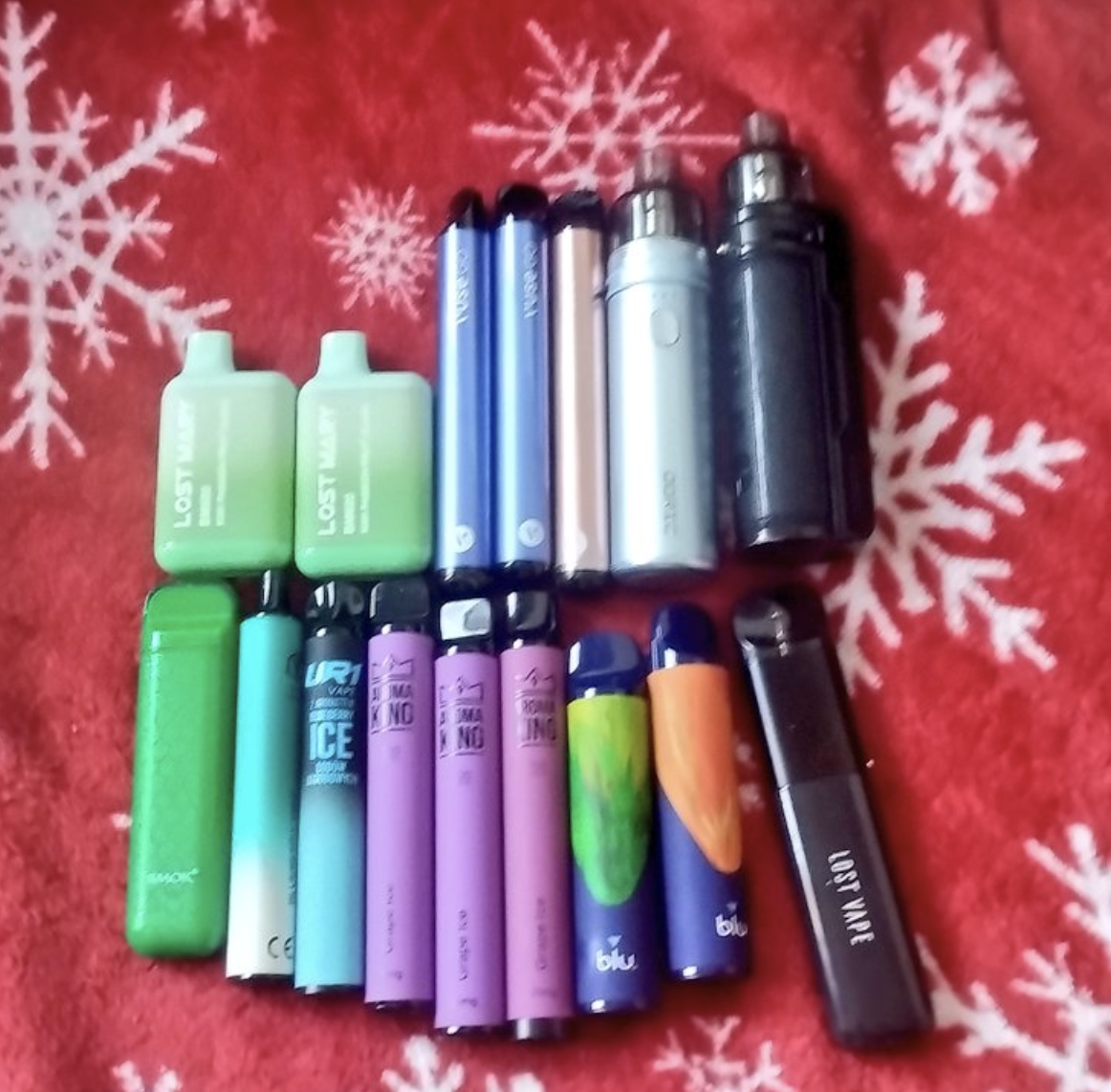
An e-cigarette brand frequently used by a Polish e-cigarette enthusiast | Source: X user Damekk
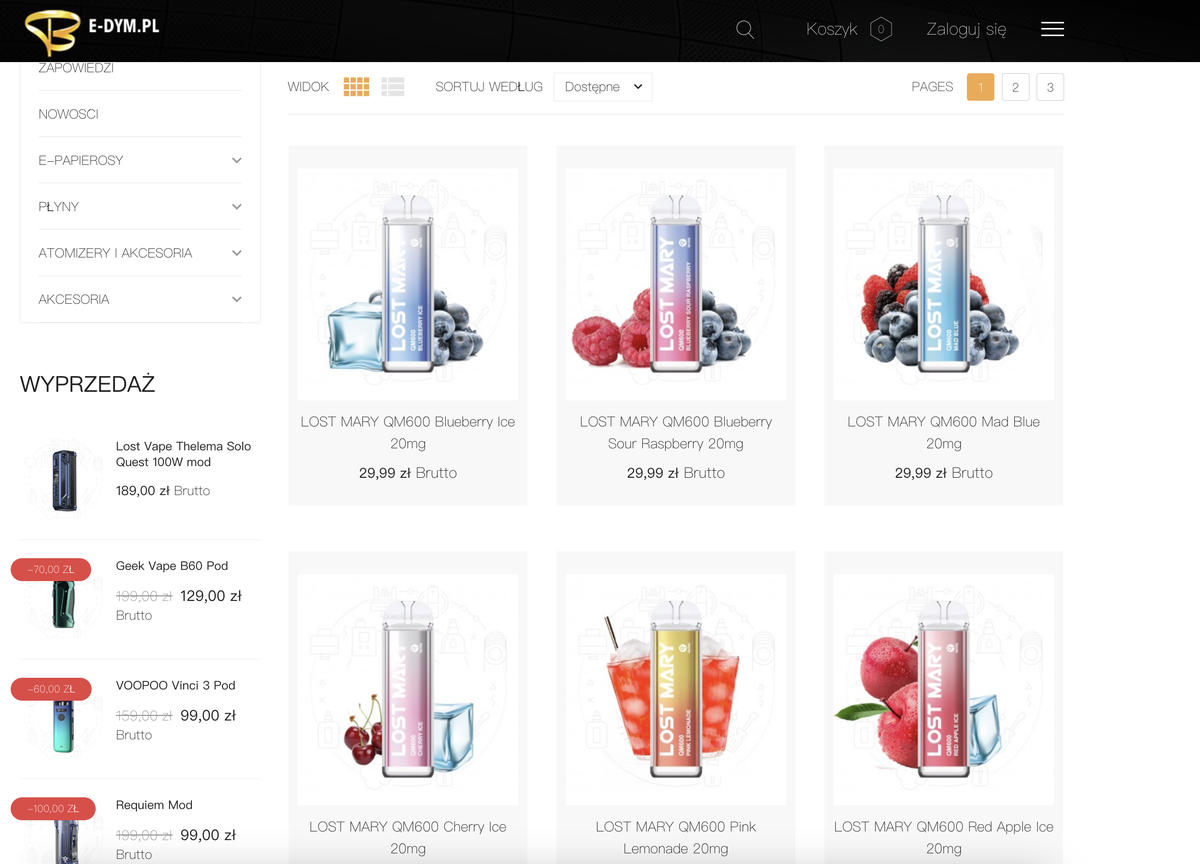
In the online market, brands such as LOSTMARY, ELFBAR, SMOK, VOZOL, INSTAFILL, etc. have also entered many online e-cigarette stores.
Unexpected regulation
As the sales of disposable e-cigarettes grow rapidly, Polish media and regulators have noticed the problem of e-cigarette use among teenagers, especially disposable e-cigarette products. In February this year, Polish media Rynekzdrowia reported that relevant data showed that the sales of disposable e-cigarettes reached 32 million in 2022, and the sales volume exceeded 100 million by 2023.
Dariusz Poznański, director of the public health department, pointed out that Poland is the "top" EU country in the use of e-cigarettes by children and adolescents. Data show that before the age of 18, one in four people uses e-cigarettes. Even though Poland has clearly prohibited the sale of tobacco products, e-cigarettes or spare containers to people under the age of 18 in the amendment to the "Health Protection against the Consequences of the Use of Tobacco and Tobacco Products", these measures are obviously ineffective.
Therefore, the public health department of the Polish government began to strictly regulate this type of product, and the signal released was "ban". In February 2024, Health Minister Izabela Leszczyna announced that a ban on the sale of disposable e-cigarettes was being considered.
"Given that up to 64% of young people have had 'contact' with this product, it is hoped that such a measure will be taken in the fastest legislative way."
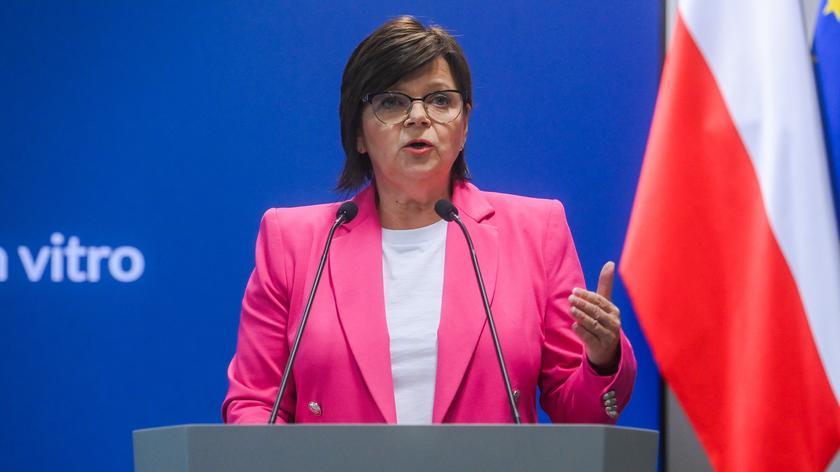
Polish Minister of Health Izabela Leszczyna | Source: tvn24
In this regard, the aforementioned Euromonitor International analyst Sidorenk believes that if Poland follows the example of the United Kingdom and other countries and implements a ban on disposable e-cigarettes, it will have a significant impact on the entire e-cigarette market.
The "measures" taken by Izabela should be legislated in April, but this legislation has been opposed by all parties on the grounds that the current ban on the sale of disposable e-cigarettes implemented by other countries cannot really solve the problem of underage use. For example, Australia is the first country to implement strict tobacco policies, but the lack of law enforcement has led to up to 92% of e-cigarette users buying products from the black market.
Maciej Powroźnik, chairman of the Polish Electronic Cigarette Industry Employers Union (ZPBV), said that the public discussion on the ban on the sale of disposable e-cigarettes lacks expertise, and most of the opinions reported by the media tend to belittle the products and repeat unverified information.
He criticized the media for ignoring the potential negative impact of the ban on e-cigarettes on public health and the economy, and emphasized that a comprehensive ban on e-cigarettes could lead to government financial losses, forcing many legally operating companies to close down, thereby limiting adult consumers' access to products that have been tested and meet safety requirements, which could lead to increased public health damage.
At the same time, he cited research from the Yale School of Public Health, saying that restrictions on e-cigarette sales would not only lead to increased sales of traditional tobacco products, but also cause people to rely on conventional cigarettes.
At the same time, there are also views that there are about 8.4 million traditional tobacco product smokers in Poland, nearly one-third of adults smoke every day, and only 1% use e-cigarettes. Although e-cigarettes are growing, they are still not mainstream tobacco products, cigarettes are.
Tobacco companies with a voice
On the issue of e-cigarettes and minors, British American Tobacco (BAT) was the first to express its position. Its Polish general manager Blagoje Jovanovic said that they have always been firmly opposed to providing nicotine products to minors.
"BAT calls on all sellers and their employees, including those selling e-cigarettes, heated tobacco products, tobacco-free pockets, nicotine e-liquids and various accessories for consuming nicotine products, to take positive action and responsibly refuse to sell to minors."
The four major international tobacco companies all have branches and factories in Poland. According to the report "Tobacco Harm in Poland" by the anti-smoking organization tobaccofreekids, international tobacco companies account for nearly 99% of the cigarette market share. Philip Morris International (PMI) has a 38% market share, followed by British American Tobacco (BAT), which has a 33% market share, Imperial Tobacco Group (IMB) and Japan Tobacco International (JTI) with 23% and 5% respectively.

These companies, which dominate the tobacco market, have shifted their focus to emerging tobacco products, especially heated tobacco products, which have stronger patent barriers. According to estimates by Japan Tobacco International, Poland's heated tobacco product market is very active, currently accounting for more than 10%. In Warsaw, this proportion has exceeded 25%, with an estimated market value of 4.8 billion zlotys (about 1.2 billion U.S. dollars).
On September 13, 2023, PMI, Poland's largest tobacco company, announced a new investment plan of more than 1 billion zlotys (about 231 million U.S. dollars) in Poland, which will be used to produce the latest IQOS ILUMA heated tobacco cartridges at its factory in Krakow.
Michal Mierzejewski, president of PMI Northern and Eastern Europe, said:
"Poland has always occupied an important position in our strategy."
Mierzejewski said that since 1996, PMI has invested 25.5 billion zlotys (about 5.8 billion U.S. dollars) in Poland for the continuous transformation of its factory in Krakow and the upgrade of its research and development center in Krakow.
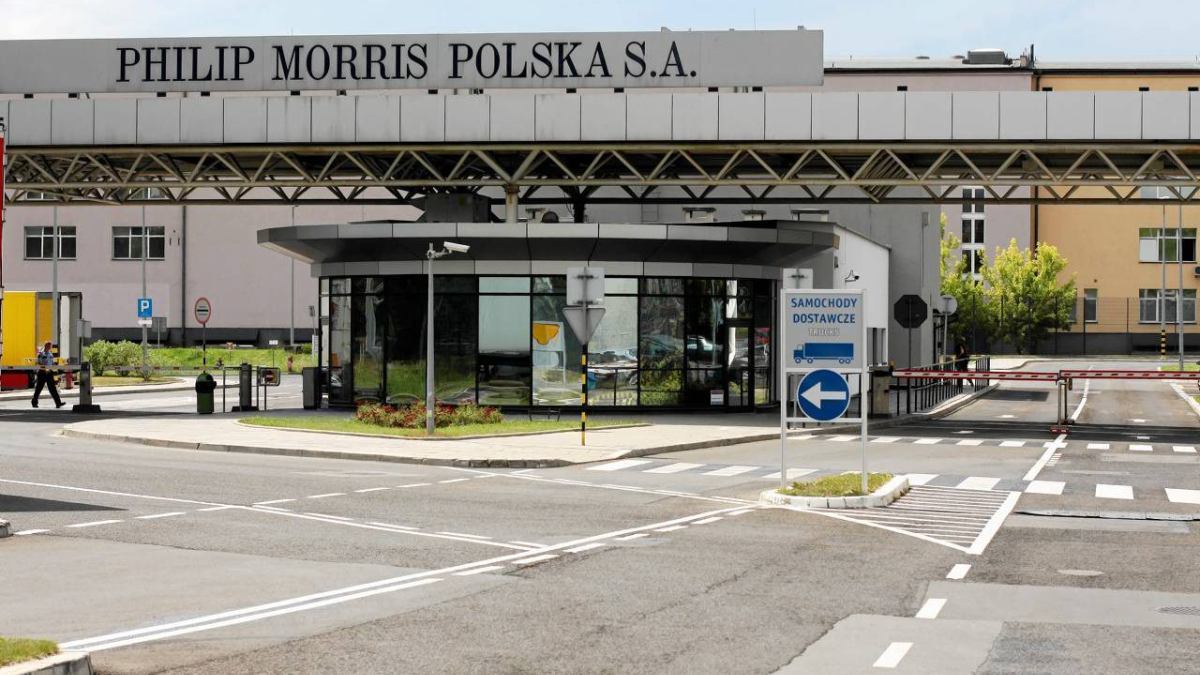
PMI's factory in Krakow | Source: PMI
On September 27, JTI announced that it would increase its investment in Poland to $1.3 billion and promote its heated tobacco device PloomX. Its innovative tobacco products factory in Stare Gostków near Lodz is increasing the production of cigarette sticks for PloomX devices to meet the growing demand for these products in Poland and around the world.
JTI Poland's director of operations Yan Sobolevskyy said that JTI is expected to make further significant investments in the production of innovative products and the entire production center in the old town of Gostków.
On January 26 this year, Sandra Magdziak, general manager of Imperial Tobacco Poland, revealed that the company plans to invest further to achieve equipment automation and sustainable development goals.
Mandziak pointed out that the company's total investment in the Tarnow-Podgorny plant has exceeded 1.5 billion zlotys. The Poznan plant is the largest of its 20 plants, and Imperial Tobacco has carried out a large-scale modernization of the plant, including expanding the scale of the production workshop, building a new fully automated high-inventory warehouse, and continuously improving the production capacity of the plant.
In addition to the competition of heated tobacco products, these tobacco companies have also established standards for nicotine pouch products. Since Poland has not yet introduced regulations on products such as nicotine pouches, in September 2023, British American Tobacco Trading Poland, Imperial Tobacco Poland, Philip Morris Poland Distribution and Swedish Match signed the Market Supervision Guidelines for Tobacco-Free Nicotine Pouches, which regulate the standards for tobacco-free nicotine pouches.
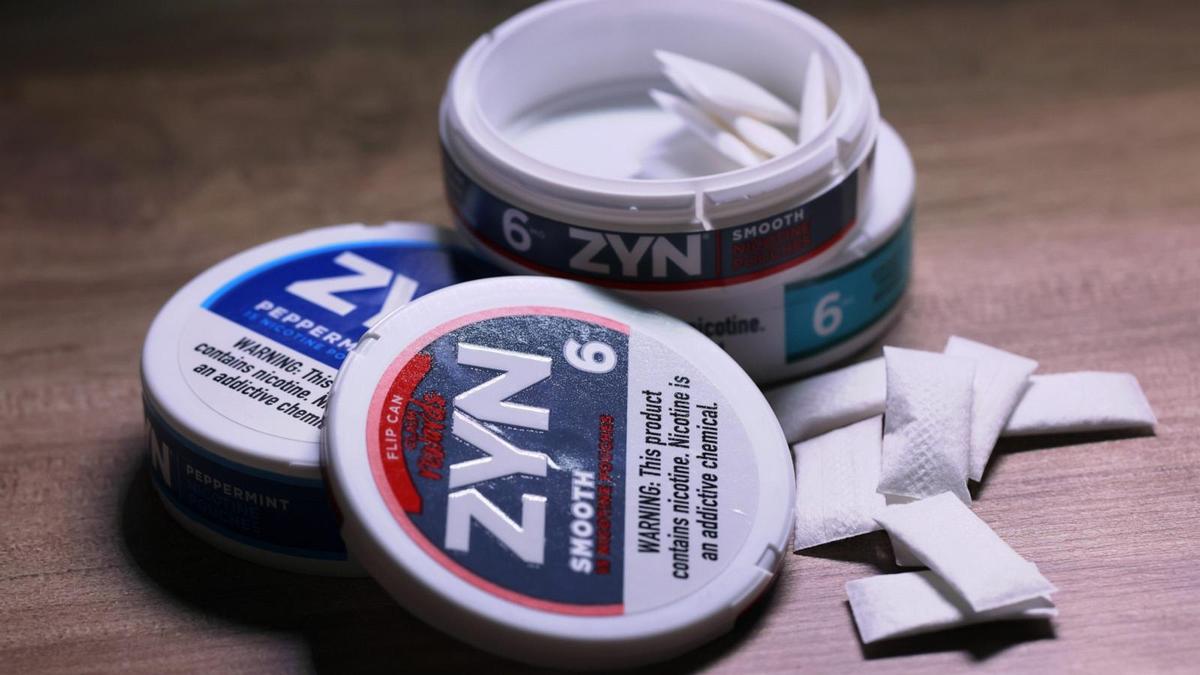
Nicotine bag brand ZYN | Source: ABC
The agreement includes: rules for marketing communication, applicable only to adults; it is recommended that the nicotine content of each bag does not exceed 20 mg; health warnings are placed on the packaging; information on product ingredients, nicotine content, bag weight, production date and expiration date, etc. on the packaging.
The guidelines were signed by nicotine bag manufacturers and are a spontaneous industry consensus. From increasing investment in heated tobacco to jointly building market supervision standards for nicotine bags, international tobacco companies led by Philip Morris International have maintained their advantages in the cigarette field while also gaining the right to speak on future new products.
A government that imposes high taxes on tobacco
Although Poland's legislation on disposable e-cigarettes has been postponed until next year, Izabela Leszczyna, who chose the policy, seems to be a health minister who pursues a complete ban on the sale of disposable e-cigarette products.
Born in 1962, she graduated from Jagiellonian University and has been a Polish teacher since 1996. She entered politics in 2007 and served as a member of the Parliament of the Republic of Poland for five consecutive terms. In 2013, she was selected by then-Prime Minister Donald Tusk to join the cabinet as Vice Chairman of the Public Finance Committee of the Ninth House of Representatives. Later, at Tusk's request, she became Minister of Health in 2023.
The Ministry of Finance, where she once worked, is also involved in the proposed ban on e-cigarettes, but her goal is to completely ban the sale of such e-cigarette products and ask the Council of Ministers to agree to her plan. It is worth noting that the decision to ban the sale of e-cigarettes is not entirely in her hands, and Finance Minister Andrzej Domański must also agree to this solution.

Polish Finance Minister Andrzej Domański | Source: wiadomosci
But at present, the Ministry of Finance and the Ministry of Health have reached a preliminary result on this issue. On July 4, Izabela said on a TV show that she told the Minister of Finance that the consumption tax on alcohol and cigarettes should be increased. She added that the Ministry of Finance's analysis showed that Poland's cigarettes and spirits are the cheapest in Europe, trying to use taxes and other means to curb the popularity of tobacco products in the country.
By July 9, at the entrepreneurs' meeting, the participants of the Polish Ministry of Finance informed the participants of the plan to increase the consumption tax on cigarettes and other tobacco products from January 1, 2025.
The specific tax increase plan is as follows:
Cigarettes: Consumption tax will increase by 25%
Cigarettes and tobacco: Consumption tax will increase by 38%
Innovative products (heated tobacco and other products): Consumption tax will increase by 50%
E-cigarettes: Consumption tax will increase by 75%
According to this plan, by 2025, the price of a pack of cigarettes will reach 20 zlotys ($5). Entrepreneurs expressed surprise at the extent of the tax increase, with e-cigarettes seeing the largest increase, reaching 75% by 2025, 50% in 2026, and 25% in 2027, for a total of 150%. Overall, excise taxes on all tobacco products will increase over the next three years, as follows:
Cigarettes: a total increase of 60% (25%, 20%, 15% respectively)
Cigarette tobacco: a total increase of 90% (38%, 30%, 22% respectively)
Innovative products (heated tobacco and other products): a total increase of 85% (50%, 20%, 15% respectively)
E-cigarettes: a total increase of 150% (75%, 50%, 25% respectively)
Sidorenk predicts that over the next five years, the tobacco and nicotine market is expected to move towards the development of the next generation of novel products, partly at the expense of traditional cigarettes and smoking tobacco. But in the face of the slow trend, the Polish government is now ready to increase taxes.
In an interview on July 4, Izabela admitted that the legislative process to ban the sale of disposable e-cigarettes will take longer. She pointed out that the draft amendment to ban the sale of disposable and reusable e-cigarettes without nicotine to children and adolescents under the age of 18 is already included in the list of legislative and programmatic work of the Council of Ministers.
She added:
"In this bill, we will also ban the online sale of such e-cigarettes and their advertising. Children, adolescents and even their parents cannot think that they are inhaling watermelon flavor, but in fact they are inhaling toxic substances."


