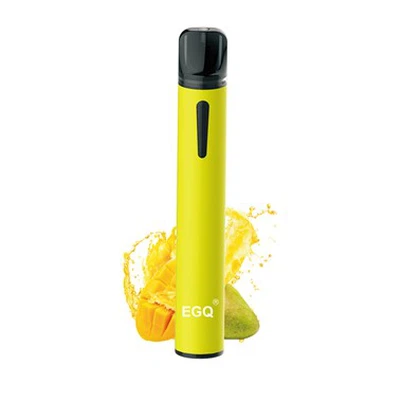
Germany May Impose A Complete Ban On Disposable Electronic Cigarettes.
Leave a message
Recently, German Environment Minister Katrin Schreiber announced after the meeting of environmental ministers from all German states held in Leipzig that the German government is preparing legislation to completely ban disposable electronic cigarettes and plans to submit the corresponding draft law by the end of 2026. This marks that, following several European countries such as Belgium, France, and the United Kingdom, Germany will also become a country where disposable electronic cigarettes are banned.
Core prohibition content: Focusing on fire safety
Minister Schreiber pointed to the main reason for this proposed ban as the potential fire safety hazards. She stated that a large number of disposable electronic cigarettes, after being used by consumers, are randomly discarded in household trash cans or yellow recycling bags. The lithium-ion batteries built into these cigarettes are prone to causing fires when they are crushed and broken in waste treatment facilities, posing a serious threat to the lives of frontline workers at sorting plants and recycling facilities, and also hindering Germany's resource recycling process. She cited industry data showing that there are approximately 30 fire accidents related to improper disposal of waste batteries in Germany every day.
It is worth noting that this proposed ban mainly targets disposable electronic cigarettes. Reusable oil-filled electronic cigarettes and related equipment are not within the scope of this ban.
Key timeframes: Mandatory recycling starting from July 2023
Although the ban on the full-scale sale of electronic cigarettes is still in the draft stage of legislation, Germany has already set a clear legal red line in the recycling aspect. According to the fourth revised version of the German Electrical and Electronic Equipment Act, starting from July 1, 2026, all retail outlets selling disposable electronic cigarettes (including newsstands, gas stations, supermarkets of all sizes, and online platforms, etc.) will face a mandatory legal obligation: to free of charge recycle the disposable electronic cigarettes used by consumers.
This law not only stipulates the recycling obligation of retailers but also requires that from July 2026, prominent dual-color recycling labels must be used in stores or online platforms.
The tightening of this legal framework stems from the sharp increase in electronic waste and fire incidents in Germany. In fact, the German Bundestag had jointly urged the government to implement the ban as early as November 2025, and environmental organizations and the Waste Management Association (BDE) had earlier urged a complete ban rather than just recycling.
The ban may have a significant impact on the market
Disposable electronic cigarettes have become increasingly popular among German teenagers and young consumers in recent years. Industry data shows that the estimated legal sales of electronic cigarettes in Germany in 2025 increased by approximately a quarter, reaching 2.4 billion euros.
German electronic cigarette industry professionals and some medical experts have criticized this ban. They believe that if the complete ban on disposable electronic cigarettes leads to a resurgence of tobacco consumption, black markets will proliferate, and smokers will return to traditional tobacco products. Additionally, previous statistics show that nearly half of the electronic cigarette retail stores in Germany have closed due to severe taxation and market pressure in the industry. The ban will undoubtedly accelerate the accelerated reshuffling of this industry.