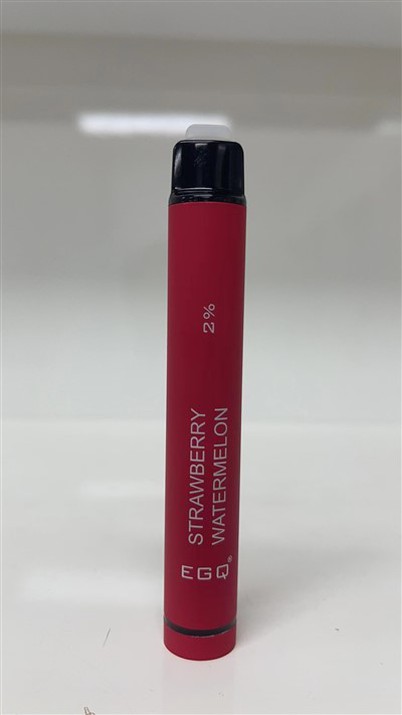
Will the EU ban flavored e-cigarettes? Health ministers from 27 countries discuss new e-cigarette regulations
Leave a message
Will the EU ban flavored e-cigarettes? Health ministers from 27 countries discuss new e-cigarette regulations

On the 21st, the health ministers of 27 European Union (EU) member states called for strict restrictions on e-cigarette flavors, a move that could affect millions of e-cigarette users and the market landscape. The discussion focused on flavor bans and cross-border sales controls, and there are still differences of opinion among the parties.
According to Vaping360 on June 21, today (21st), the health ministers of all 27 European Union (EU) member states discussed proposals to restrict the flavors of e-cigarettes and other nicotine products (including nicotine bags) in a meeting. Their position could lead to stricter e-cigarette regulations for millions of European nicotine consumers.
One of the 10 "institutions" of the European Commission, the Employment, Social Policy, Health and Consumer Affairs Committee (EPSCO) will consider the proposals of Latvia and Denmark to support an EU-wide flavor ban and crackdown on cross-border sales.
The Latvian document was also supported by delegations from Cyprus, Estonia, Ireland, Lithuania, Luxembourg, Malta, Portugal, Slovenia and Spain. The Danish proposal was endorsed by Estonia, Finland, France, Germany, Ireland, Luxembourg, Malta, the Netherlands, Poland, Slovenia and Spain.
If the health ministers reach consensus support for the proposals, the next step would be to ask the European Commission to propose draft legislation, which would eventually be voted on by the Council and the European Parliament. In the process, national elections could soften or strengthen support for flavor bans in different countries.
Currently, seven EU countries have passed laws banning e-cigarette flavors: Denmark, Estonia, Finland, Hungary, Lithuania, the Netherlands and Slovenia. Spain recently completed a public consultation on a proposed flavor ban, while Latvia is rolling out flavor restrictions. Currently, no European country has passed a bill banning e-cigarettes outright.
The existing Tobacco Products Directive (TPD) regulates nicotine and tobacco product standards within the EU, allowing member states to set their own rules on flavors.
However, according to Latvia's proposal, a standalone ban is ineffective because "there is no total ban on cross-border distance sales of tobacco or related products (including e-cigarettes) at EU level and no ban on cross-border sales."
"Given the ongoing differences between Member States on the regulation of flavours and flavourings in e-cigarette oils and cross-border distance sales, there is a need to develop further common regulation at EU level."
The Danish paper goes a step further, calling on the EU to allow Member States to ban specific categories of nicotine products.
"Such initiatives should include flavour bans on nicotine products, limits on the nicotine content in these products and, where necessary, bans on certain products…More broadly, we call on the European Commission to initiate a debate on nicotine products while allowing it to examine a range of possible regulations giving Member States the possibility to ban defined product categories."
European consumer group European Tobacco Harm Reduction Advocates (ETHRA) wrote to all EU health ministers to oppose the proposal and explain the consequences of a flavour ban.
"We want to be cautious in the discussion and provide some factual background that the measures proposed are unlikely to protect young people and may do more harm than good overall. A full or partial ban on the production and supply of new nicotine products will not eliminate the basic demand for nicotine. All safer nicotine products have some flavor (including tobacco flavor), so a ban on flavors is actually a substantive ban on products."
"Bans do not make banned products disappear or demand disappear."
ETHRA offers 4 strategies to reduce youth access to e-cigarettes and other nicotine products:
Legal regulated market;
Age-verified retail system;
Marketing controls;
Flavor description controls.
The organization asked EU health ministers to base their upcoming revision of the main EU tobacco directive on "evidence, thoughtful consideration and meaningful consultation."
"These directives can have fatal or life-saving effects on European citizens, and we should not start the revision with pre-set results that are based on weak or misleading evidence."