A Comprehensive Analysis of the E-cigarette Industry in 2025: Technology, Culture and Trends
Leave a message
Core Hardware and Technology: The Evolution of Atomizers and the Intelligent Revolution of Chips
The atomizer, as the core component of an electronic cigarette, has always been the focus of industry attention due to its technological evolution. In 2024, nano-ceramic cores (NTC Coils) began to gain popularity. This new type of atomizer effectively reduces the risk of burnt hits and brings users a more stable and superior vapor experience. The atomizer mainly consists of a coil and a cotton wick. Currently, there are mainly two types of atomizers on the market: rebuildable (such as RDA/RDTA/RTA) and stock coils. The rebuildable atomizers allow users to wind the coil and replace the cotton wick themselves, providing a high degree of personalization and customization, making them suitable for players who pursue the ultimate taste and vapor volume; while the stock coils are favored by the majority of ordinary users for their convenience, ease of use, and lack of complex maintenance requirements.
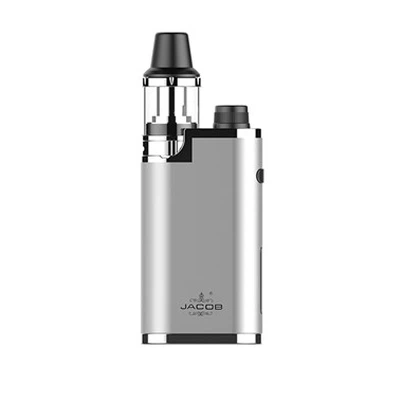
In terms of device form, Box Mod and Pen-style are the two major mainstream types. Box Mod is usually larger in size and supports multiple battery configurations, providing higher power output and the function of customizing output curves, such as the Replay mode of DNA chips, allowing users to experience the ultimate vapor effect and rich flavor layers. Pen-style devices are known for their lightweight and portable design, especially compatible with high-concentration nicotine salt (Nic Salt) e-liquids, making them more suitable for consumers who wish to use electronic cigarettes easily and conveniently at any time and place in their daily lives.
In terms of startup methods, Auto-draw and Button-activated each have their own advantages. Auto-draw is activated by airflow sensing, perfectly simulating the natural experience of traditional smoking and is commonly found in one-time electronic cigarettes and other products that aim for simple operation; Button-activated is triggered by pressing a button, allowing users to precisely control the inhalation time and ensure that each inhalation achieves the best effect, especially in high-power devices.
Chipset Technology plays a crucial role in the safety and intelligence of electronic cigarettes. Modern electronic cigarette chips are equipped with various functions, such as Temperature Control (TC Mode), Smart Wattage, and Short-Circuit Protection, etc. These technologies not only enhance the performance of the devices but also significantly improve the safety during usage, providing comprehensive protection for users.
Vape oil and chemical components: The balance of PG/VG and the diversity of flavors
The e-liquid is the soul of an electronic cigarette, and its composition and proportion directly affect the taste and experience of users. PG (Propylene Glycol) and VG (Vegetable Glycerin) are the main base materials in e-liquid, and the proportion of the two varies in different products. PG has the characteristic of low viscosity, which can enhance the flavor and throat hit, but some users may feel dry mouth; while VG has a higher viscosity and can produce thick smoke, and is often used in cloud chasing devices. When choosing e-liquid, users often need to find the best balance point of PG/VG according to their own taste preferences and device characteristics.
In terms of taste, e-cigarettes offer a wide variety of choices, ranging from classic tobacco flavors to refreshing fruity flavors, sweet dessert flavors, and cool menthol or icy flavors. There is something for everyone. However, some candy-like flavors of e-liquid have been banned from sale in several countries due to the potential to attract teenagers to use them. This reflects the delicate balance between taste innovation and social responsibility in the industry.
Nicotine strength is another important parameter, and its unit is usually mg/ml or %. Different countries and regions have strict regulations on nicotine strength. For instance, the FDA of the United States stipulates that the upper limit of nicotine strength is 20mg/ml (2%), while the national standard of China is ≤20mg/g. When users choose nicotine strength, they need to comprehensively consider their smoking habits, device types, and sensitivity to nicotine, etc., to achieve the best usage effect.
User Behavior and Culture: Evolution from MTL to Vape Tricks
The behaviors and cultures of e-cigarette users demonstrate the unique charm of this field. MTL (mouth-to-lung) and DTL (direct-to-lung) are two main smoking methods. MTL mimics traditional smoking and adopts high resistance (>1.0Ω) and low power (<20W) settings, which are suitable for users who seek a similar experience to that of real cigarettes; while DTL emphasizes large amounts of vapor, using low resistance (<0.5Ω) and high power (>50W) equipment, attracting many players who pursue the ultimate vapor effect.
Stealth Vaping refers to a covert way of using electronic cigarettes. It is achieved through low-temperature devices that produce no visible smoke, allowing users to use them easily even in restricted areas of public places, thus meeting the usage demands of some users in specific environments. Meanwhile, Vape Tricks are an important part of the electronic cigarette culture. Users showcase their skills and creativity through smoke performance techniques, such as O-rings and Ghost Inhale. However, with the increase in health controversies, Vape Tricks gradually became marginalized in 2025, reflecting the changing attitude of society towards electronic cigarettes.
Safety and Regulations: Specifications of TPD/TRPR and New Trends in Environmental Protection
Globally, the safety and regulatory supervision of electronic cigarettes are becoming increasingly strict. TPD (Tobacco Products Directive) is the EU's regulation for electronic cigarettes, which has imposed strict restrictions on aspects such as the capacity of e-liquid (≤ 2ml) and nicotine concentration (≤ 20mg/ml); after Brexit, the TRPR (Tobacco Related Products Regulations) adopted by the UK has maintained similar standards while relaxing advertising restrictions. The implementation of these regulations aims to protect consumers' rights and interests, regulate market order, and also has a profound impact on the development of the electronic cigarette industry.
To prevent children from misusing them, 90% of countries worldwide have enacted laws requiring that electronic cigarette products adopt Child-resistant Packaging, such as designs like pressing and rotating bottle caps, etc. This has become a basic requirement in the design and production of electronic cigarette products. Moreover, leakage prevention technology has also become a key point of competition among various brands. By adopting technical solutions such as Vacuum Sealing and Magnetic Pod, the problem of oil leakage has been effectively solved and the user experience has been enhanced.
In terms of environmental protection, biodegradable pods have gradually become the mainstream trend. They are made of environmentally friendly materials such as corn starch-based plastic (PLA) or algal polymers, which not only meet the needs of users but also reduce the impact on the environment. The promotion of this environmental concept reflects the efforts of the e-cigarette industry to strike a balance between technological innovation and sustainable development.
Emerging Technologies and Markets: Smart Electronic Cigarettes and the Battle with Global Regulation
With the continuous advancement of technology, smart electronic cigarettes (Smart Vape) have begun to emerge, featuring functions such as Bluetooth connection with APPs and biometric unlocking (fingerprints/face recognition), providing users with a more personalized and intelligent usage experience. However, these technologies have also raised privacy concerns and controversies regarding addiction data tracking. For instance, Juul Labs was once sued for collecting users' habits, which has prompted the industry to focus more on protecting user privacy and data security while pursuing technological innovation.
The Heating Not Burning Technology (HNB, Heat-not-Burn) is another major innovation in the field of electronic cigarettes. Unlike traditional electronic cigarettes, its representative products such as IQOS and Glo have attracted widespread attention in the global market. Some countries classify HNB products as tobacco products and impose additional taxes on them, which also reflects the differences and competition in regulatory policies among various countries.
At the market level, OEM (Original Equipment Manufacturer) and ODM (Original Design Manufacturer) are two main business models. OEM mode involves contract manufacturing, such as SMK International manufacturing equipment for Vuse, which relies on its strong production capacity to meet the demands of global brands; ODM integrates design and production, like Aspire's Nautilus series, which has won market recognition through innovative design and high-quality products. Meanwhile, White Label Products (brand-agnostic electronic cigarettes) as a business model gradually decreased in 2025 due to stricter regulations, which also prompted the industry to pay more attention to brand building and product innovation.
PMTA: Compliance Requirements in the US Market
PMTA (Pre-market Tobacco Application) refers to the compliance requirements set by the FDA for new tobacco products after February 15, 2007. Any new tobacco product, including e-cigarettes, if it wants to be legally sold in the United States, must go through FDA approval. The agency will comprehensively consider whether the product is beneficial to public health.
The application process of PMTA is rather complex, involving multiple stages such as pre-application meeting, acceptance review, application review and substantive review. During the application process, enterprises are required to provide detailed information including basic product information, descriptive information, product samples, product labels, scientific research results, product attributes and production processes. In addition, in vivo toxicology studies need to be conducted to assess the health risks of the product to users and non-users.
The purpose of formulating PMTA is to regulate the e-cigarette market and ensure the safety and compliance of the products on the market. For e-cigarette enterprises, obtaining PMTA approval not only means being able to legally sell products in the US market, but also represents recognition of the quality and strength of their enterprises. However, the application cost of PMTA is high and the technical difficulty is great, which poses a huge challenge for many small and medium-sized enterprises.
As of 2024, the FDA has expedited the review process for PMTA. It is expected that within the next two to three years, the US market will be dominated entirely by compliant e-cigarette products. This also means that products that have obtained PMTA authorization will have a greater advantage in the market, while those that have not passed PMTA may gradually be phased out. STN (Submission Tracking Number), which is the unique identifier assigned by the US Food and Drug Administration (FDA) to imported e-cigarette products, currently, the vast majority of Chinese enterprises stop at STN only for customs clearance purposes.
Summary and Trend Outlook: The Future Path of Electronic Cigarettes
In 2025, the e-cigarette industry is standing at a new crossroads. Due to the environmental protection ban, disposable e-cigarettes are gradually being replaced by modular vape devices. This transformation not only complies with environmental protection requirements but also provides users with more convenience and economy. At the technological frontier, new technologies such as solid-state e-liquid and ultrasonic atomization have entered the experimental stage, and are expected to bring new experiences and possibilities to e-cigarettes.
Worldwide, the World Health Organization (WHO) has been actively promoting the Vape Tax. The tax rate is based on that of tobacco products. For instance, the Philippines implemented a 35% consumption tax in 2024. This trend will have a significant impact on the market price and consumption behavior of e-cigarettes, and also prompts the industry to continuously seek new development opportunities while responding to regulatory requirements.
The e-cigarette industry, as a field brimming with innovation and transformation, has both challenges and boundless possibilities for its future development. From the continuous upgrading of hardware technology, to the optimization and innovation of e-liquid components, and to the diversified evolution of user culture and the increasingly improved global regulations, every dimension is driving the industry forward. We have reason to believe that with the advancement of technology and the continuous deepening of society's understanding of e-cigarettes, this industry will achieve sustainable development under regulation, providing more healthy and convenient choices for adult smokers, and also presenting a more colorful appearance in the global market.