Statista data: ELFBAR accounts for more than 50% of the German market, followed by Vuse and Juul
Leave a message
Statista data: ELFBAR accounts for more than 50% of the German market, followed by Vuse and Juul

According to data from Statista, the number of e-cigarette users in Germany has increased, and sales will reach about 600 million euros in 2022, and are expected to continue to grow in the next two years. Among them, the ELFBAR brand leads with a market share of 55%, followed by e-cigarette brands Vuse (31%) and Juul (7%).
According to T3n on August 14, in recent years, the number of smokers of traditional cigarettes in Germany has gradually decreased, while the use of e-cigarettes has increased significantly.
According to data from the Electronic Cigarette Trade Association, sales reached about 600 million euros in 2022 and are expected to continue to grow in 2023 and 2024. Unlike traditional tobacco cigarettes, the prices of e-cigarette liquids and cartridges have remained stable recently. In July 2024, the consumer price index for e-cigarette products was 105.2 points (2020 = 100), while the price index for tobacco in the same period was about 130.4 points.
According to data from Statista, e-cigarettes of various flavors attract young people. About 18.6% of consumers are between 18 and 24 years old. Among adults, the age group with the most users is 25 to 34 years old, accounting for 27.3%, followed by 35 to 44 years old, accounting for 22.2%. Among older groups, the proportion of e-cigarette users gradually decreases.
According to Statista Market Insights, ELFBAR occupies the main market of German e-cigarettes with its appearance and price advantages, with a market share of about 55%. Its biggest competitors are e-cigarette brands Vuse (31%) and Juul (7%).
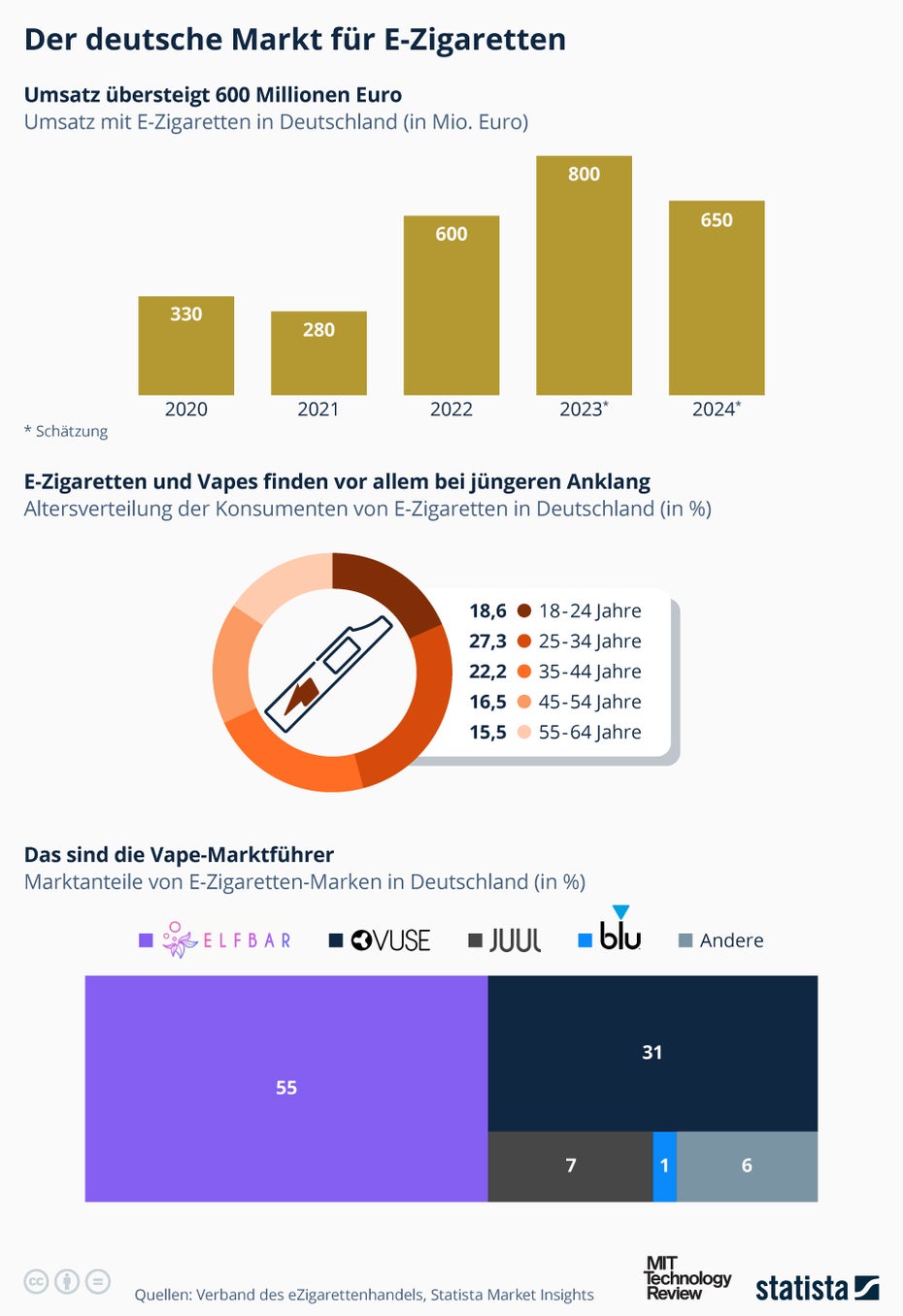
Image source: Statista Market Insights
It is reported that Statista is a global data platform headquartered in Germany, focusing on market and consumer data. Founded in 2007, it provides users with statistical data on more than 80,000 topics, covering more than 170 industries. These data come from more than 22,500 sources, including market research reports, industry analysis, government data, and statistical information from media and academic institutions.