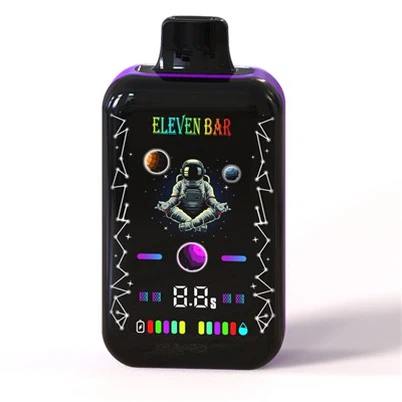
Starting a Successful E-Liquid Wholesale Business
Leave a message
To build a successful e-liquid wholesale business, a strategic approach combining regulatory compliance, market awareness, supply chain efficiency, and digital innovation is essential. Based on current industry data and best practices, here's a comprehensive roadmap:
⚖️ 1. Market Research & Regulatory Compliance
Industry Dynamics: The global e-liquid market is projected to grow steadily (CAGR undisclosed in sources but implied as viable 46), driven by vaping adoption. However, regional regulations vary significantly (e.g., FDA in the US, TPD in Europe).
Certification Requirements: Partner with manufacturers holding ISO, GMP, or HACCP certifications to ensure product safety and legality. Ingredient transparency (PG/VG ratios, nicotine purity) is non-negotiable .
Gen Z Trends: Capitalize on health-conscious demand for low-nicotine or nicotine-free options, as 61% of Gen Z plans to reduce alcohol consumption, indicating shifting preferences .
🤝 2. Supplier Sourcing & Product Quality
Manufacturer Vetting: Source from labs using pharmaceutical-grade ingredients (e.g., USP/PhEur-certified nicotine) . Platforms like 1688.com offer cost-effective options, but use agents to navigate language barriers, quality checks, and logistics .
Product Differentiation: Stock diverse formats (pre-filled pods, bottled liquids) and flavors. Prioritize brands with natural extracts (e.g., tobacco absolutes) for premium positioning .
Sample Testing: Order batches to validate consistency, leakage, and flavor accuracy before bulk procurement .
🚚 3. Business Model & Operations
Licensing & Documentation: Register as a legal entity and obtain wholesale permits. Prepare business licenses, tax IDs, and sales channel proof (e.g., store/website details) for supplier approvals .
Digital Infrastructure:
Use B2B e-commerce platforms (e.g., Shopify Plus, WooCommerce) for automated ordering, tiered pricing, and Net 30 payment terms .
Integrate ERP tools like DSFulfill to sync with 1688.com inventories, enabling real-time stock updates and multi-platform distribution .
Logistics: Partner with global carriers (e.g., DHL Express) for reliable, eco-friendly shipping (e.g., GoGreen Plus) .
📣 4. Sales Channels & Marketing
Target Clients: Focus on:
Online retailers (vape shops, e-commerce marketplaces).
Offline stores (convenience chains, specialty vape outlets) .
Wholesale Requirements: Enforce minimum order quantities (MOQs) (e.g., $168 for online sellers, $1,000 for brick-and-mortar) and enforce MAP policies to prevent price undercutting .
Brand Building: Offer marketing support like editable product images and co-branded campaigns. Require retailers to tag your business on social media .

💰 5. Financial Planning & Scalability
Startup Costs:
Initial inventory: $10,000–$30,000 (varies by MOQs).
Licensing/compliance: $2,000–$5,000.
Platform/tech setup: $200/month (basic) to $2,000/month (advanced ERP) .
Pricing Strategy: Aim for 30–50% margins by negotiating bulk discounts. For example, 40% discounts for online sellers on orders over $168 .
Hybrid Expansion: Start with dropshipping to test demand, then scale into warehousing. Explore DTC collaborations (e.g., fulfilling orders for brands expanding into wholesale) .
⚠️ 6. Risk Mitigation
Quality Control: Audit suppliers annually. Use third-party labs for heavy metals and diacetyl testing .
Inventory Diversification: Avoid over-reliance on one manufacturer; source from multiple regions (e.g., China for cost, EU/US for premium lines) .
Compliance Updates: Monitor regulations like potential nicotine caps or flavor bans.
Table: Key Certifications for E-Liquid Suppliers
| Certification | Purpose | Relevance |
|---|---|---|
| ISO 9001 | Quality management systems | Ensures consistent production standards |
| GMP | Good Manufacturing Practices | Guarantees sanitary, controlled processes |
| HACCP | Hazard analysis & critical control | Prevents contamination risks |
📈 Conclusion
Success hinges on agile adaptation to regulations, tech-driven operations, and relationship-building with suppliers/clients. Leverage tools like DSFulfill for 1688.com integration and DHL for logistics to streamline workflows. With the global B2B e-commerce market reaching $57.6 trillion by 2030 , prioritizing digital efficiency and compliance will position your business competitively.
For deeper insights, refer to:
Market analysis: Vantage Market Research
Supplier platforms: 1688 via DSFulfill
Compliance guidelines: Regional trade associations (e.g., FDA/TPD portals).