

Media undercover investigation: The illegal problem of the Irish e-cigarette market is frequently involved in a number of well-known brands
Leave a message
Media undercover investigation: The illegal problem of the Irish e-cigarette market is frequently involved in a number of well-known brands
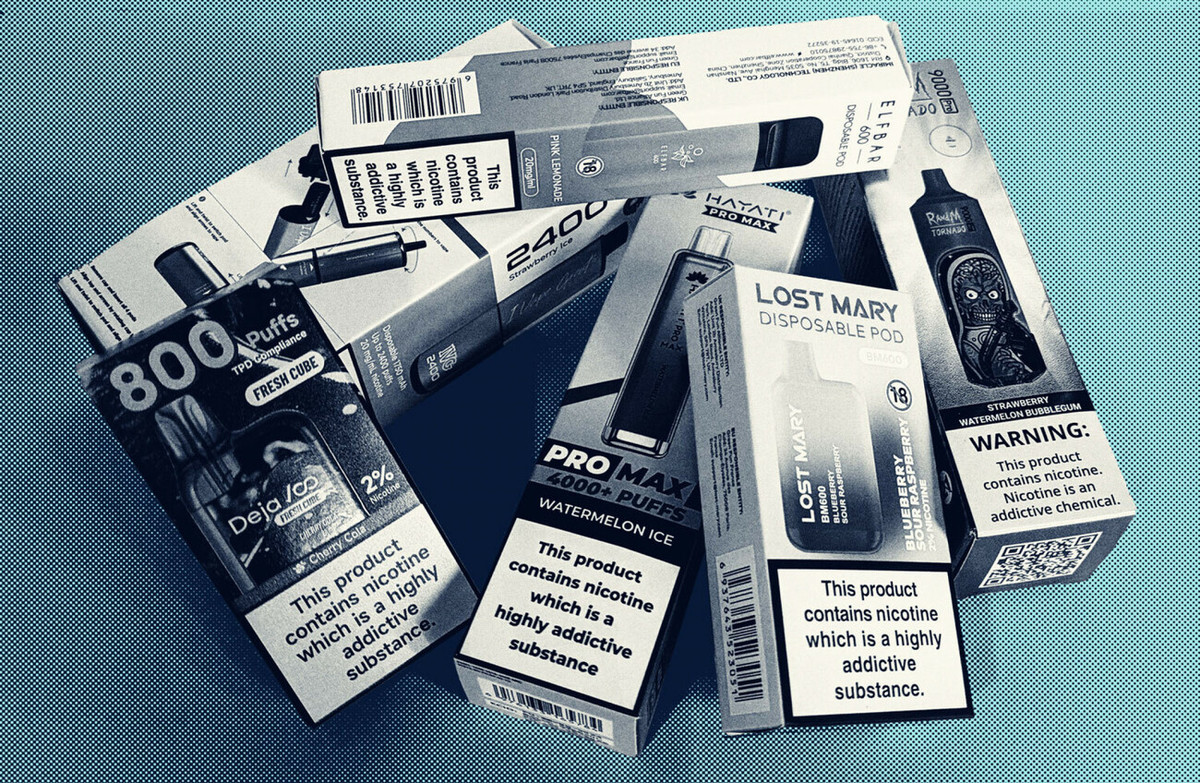
Irish independent media The Journal Investigates has published a lengthy report - "Undercover investigation Reveals Scale of illegal e-cigarette market in Ireland". The report provides an in-depth look at the current state of the Irish e-cigarette market, revealing in detail the many problems that exist in the market, including a number of well-known e-cigarette brands such as RandM, Hayati, Lost Mary and Elfbar.
On January 27th, Irish independent media The Journal Investigates publishes a lengthy report titled "Undercover investigation reveals scale of Ireland's illicit e-cigarette market. vape market "), in-depth analysis of the status quo of the Irish e-cigarette market, revealing many problems, mainly involving the following key aspects:
1. Illegal sales are widespread: The Journal Investigates Investigates Investigates Investigates undercover visits to 16 different venues in Dublin late last year and found that more than 80% (13) could buy illegal e-cigarettes, with single-use e-cigarettes being commonly sold illegally in Dublin shops, which are located all over Ireland.
2. Various product violations: The undercover team bought a variety of illegal products, such as expired products in 3 stores, products without correct health warnings in 12 stores, products exceeding the legal limit of e-cigarette oil in 2 stores, and products that were not equipped with health and safety information leaflets in 3 stores.
3. Some brand products sell large quantities of products: The reporter bought e-cigarette products from two stores that exceed the legal limit, such as "RandM Tornado 9000 Pro" containing 18 ml of e-cigarette oil, which is 9 times the legal amount, and its license number is the same product was warned by the European Union, the manufacturer Shenzhen Fumote Technology Co., Ltd. did not respond to relevant inquiries; The Hayati Pro Max contains 10ml of e-cigarette liquid, five times the legal limit. The manufacturer, PAX International Limited, did not respond to requests for comment.
4. Serious lack of health warnings: 15 of the 21 types of e-cigarettes purchased are only marked with health warnings in English, which does not meet the requirements of labeling in both Irish and English. A large number of products on sale in the market lack correct health warnings, involving many popular brands, such as Lost Mary and Elfbar, most of which are not authorized to be sold in Ireland.
5. Retailers selling expired products: The five e-cigarettes purchased by the team have been expired for several months, involving Lost Mary and Elfbar and other brands. Some retailers denied selling expired products or did not respond.
6. Retailers dealing with confusion: Some e-cigarettes lack safety flyers, such as "RandM Tornado 9000 Pro" and "DejaVoo Fresh Cube". Shop owners say the products have been taken off the shelves but sold to undercover teams. When questioned, they say they will throw away the offending products due to customer demand. Bliz Electronics Limited, the importer, did not respond to a request for comment.
7. Enforcement supervision is questioned: Mep Barry Andrews pointed out that the prevalence of violations of e-cigarettes highlights the lack of actual enforcement and regulatory inspections by the Irish Health Service Executive in retail outlets, last year set a target of 40 planned inspections of e-cigarette manufacturers and distributors, but it is not known whether it has been completed, the new government has promised to introduce a wide range of restrictions on e-cigarettes, and the relevant EU rules are also under review. Members of the public can report sales violations.
The following is the original translation (the content is translated by AI, the specific content is subject to the English original) :
A new undercover investigation has revealed the illegal sale of single-use e-cigarettes in shops across Dublin is widespread.
The Journal Investigates went undercover late last year and visited 16 different locations in the city, including e-cigarette boutiques, mobile phone repair shops, corner shops and a market stall on Moore Street, where it found e-cigarettes were blatantly being sold.
In more than 80 percent of these randomly selected locations, or 13 locations, we were able to buy e-cigarettes that did not comply with an EU regulation or were in violation, highlighting how easy it is to buy such e-cigarettes.
Shops like the one our team visited can be found almost everywhere in Ireland.
Our findings show that many people are unknowingly buying and using unsafe e-cigarettes, which may contain expired ingredients or lack the necessary safety warnings, and sellers are oblivious to the relevant regulations.
In a largely unregulated industry, many retailers blatantly disregard the few rules and brazenly display products in shop Windows that should not be on sale, a clear sign of the authorities' failure to enforce the law.
Our undercover team bought expired products in three stores, purchased products in 12 stores without the correct health warnings on the packaging, and, perhaps more worryingly, purchased products in two stores that contained more e-liquid than the legal limit.
Professor Donal O 'Shea, head of The Department of chemistry at the Royal College of Surgeons in Ireland (RCSI), told The Journal Investigates that people who use e-cigarette products are already "taking a lot of unknown risks" because of the lack of research on e-cigarettes, And the use of illegal products is "worse."
He also added that the "enormous variety" of e-cigarette products, each of which uses different chemicals to flavor them, makes it difficult for researchers and regulators to accurately predict the effects of e-cigarettes on our health.
And three stores sold us e-cigarettes without the required health and safety information leaflets.
Responding to our findings, MEP Barry Andrews said that "the current situation in Dublin is like the 'Wild West' as far as e-cigarette products are concerned," adding that shops selling e-cigarettes should be "subject to stricter checks and regulation."
According to the European Tobacco Products Directive, e-cigarette products must comply with a number of regulations before entering the Irish market.
This includes clear health warnings on packaging in both Irish and English, with nicotine concentrations not exceeding 20 mg/ml.
The nicotine e-liquid contained in disposable e-cigarettes must not exceed 2 ml.
E-cigarettes can only be sold in packages that are not easily opened by children, and there are further restrictions on the advertising and promotion of e-cigarettes and other e-liquid products.
Manufacturers, importers and retailers found to be breaking the rules face prosecution and hefty fines.
Still, The Journal Investigates easily found numerous non-compliant products on sale in Dublin.
Shops that illegally sell e-cigarettes
The two e-cigarettes purchased by our undercover team from two different stores significantly exceeded the legal limit for disposable e-cigarettes.
One of them, the RandM Tornado 9000 Pro, comes with 18 milliliters of e-liquid, nine times the legal amount.
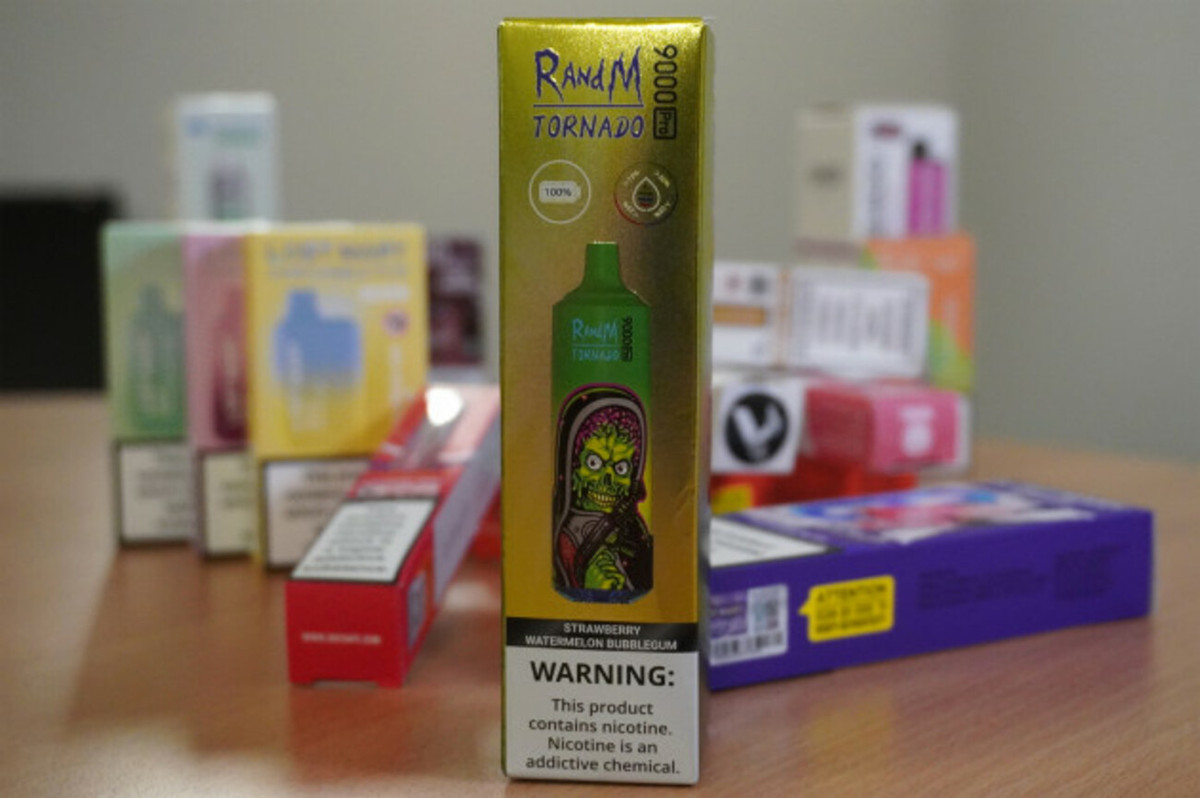
The RandM Tornado 9000 Pro e-cigarette was illegally sold to reporters | for exceeding the legally permitted limit of e-cigarette fume. Photograph: Nicky Ryan/The Journal Investigates
The product, which has the same license number as the one we purchased, has been alerted by EU Safety Gate, the EU's rapid warning system for hazardous non-food products, and retailers were notified of their withdrawal in early 2024.
The National Environmental Health Service (NEHS) of the Irish Health Service Executive (HSE) uses the system to alert consumers and other EU Member States to products that are found to pose a serious risk to health.
Although these products are labeled with different nicotine concentrations or flavors, they all have the same problem: they contain excessive nicotine-containing liquid (18 ml), which is consistent with the product we purchased.
The warning also states that excessive amounts of liquid can lead to "accidental ingestion of high doses of nicotine" and that the product does not comply with EU regulations.
The box on which we purchased the e-cigarette also stated that it should not be sold in Ireland.
The back of the box reads "Allowed for sale in the United States only," along with information related to California's Proposition 65, a state law requiring warnings for products sold in California that contain certain chemicals.
In addition, the shelf life is not listed on the box, which means that it is difficult to know the production date of the product.
The Journal Investigates how the "RandM Tornado 9000 Pro" is being sold in Irish stores and how it is getting into the Irish market, I contacted the only company listed on the box, ShenZhen Fumot Technology of China.
The company developed and produced e-cigarettes, but it was not possible to identify from the packaging who supplied the products to Ireland. Despite repeated attempts to reach out, the company did not respond.
In 2022, the US Food and Drug Administration (FDA) issued a warning letter to Shenzhen Formote Technology Co., Ltd. for the unauthorized sale of electronic cigarette products with cartoon image packaging.
The e-cigarette we purchased is also not on the FDA's list of authorized e-cigarettes, which also calls into question its legality in the United States.
Our undercover video also shows this e-cigarette, along with three other e-cigarettes of different models, prominently displayed in shop Windows. Hayati Pro Max, another e-cigarette whose oil exceeds the legal limit, is also clearly visible.

Screenshots from undercover video taken by reporters show e-cigarettes containing more e-liquid than The legal limit | Photo credit: Maria Delaney/The Journal Investigates
We tried to contact the owner about the incident but did not receive a response.
Our team also picked up a "Hayati Pro Max" from another store, which highlights the extent to which such products are rampant.
The e-cigarette contains 10ml of e-cigarette liquid, which is five times the legal limit for single-use e-cigarettes.
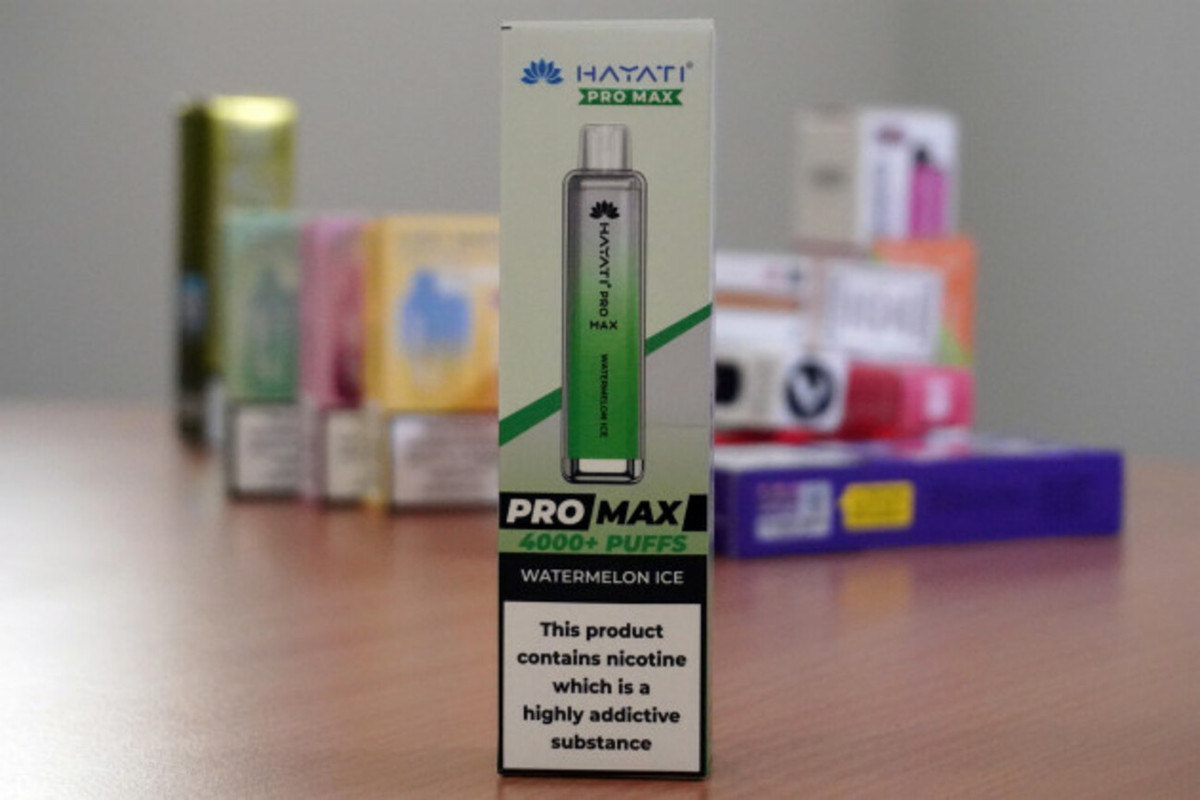
The undercover team also bought Hayati Pro Max, another e-cigarette that exceeded the legally allowed limit of e-liquid | Photo credit: Nicky Ryan/The Journal Investigates
When our team tried to contact the owner of the store where the e-cigarette was purchased, he refused to answer questions and hung up several times.
Our team contacted PAX International Limited, the Chinese manufacturer of the Hayati, to inquire about the sale of the product in Ireland and its entry into the Irish market.
However, the company had not responded by the time of publication. It is unclear which company is responsible for supplying the product to the Irish market.
A spokesperson for The Irish Health Service Executive told The Journal Investigates that "the National Environmental Health Service runs a targeted inspection and sampling programme, with a particular focus on checking the nicotine content and volume of the liquid in e-cigarettes".
All e-cigarettes we purchase claim a nicotine concentration of 20 mg/ml or 2%, but we cannot independently verify these claims due to the need for laboratory testing.
The Irish Health Service Executive has also informed us that they will be investigating the shops that illegally sold these e-cigarettes to us, as well as all other irregularities that our team found in the e-cigarettes they purchased.
Imported e-cigarettes lack proper health warnings
The vast majority of e-cigarettes purchased by our team do not have the correct health warnings on the box.
Regulations require the warning to be written in both Irish and English, but 15 of the 21 e-cigarettes we bought had the warning in English only.
Our undercover video also shows that there are countless products on sale that lack health warnings in both Irish and English, showing just how common these non-compliant e-cigarettes are.
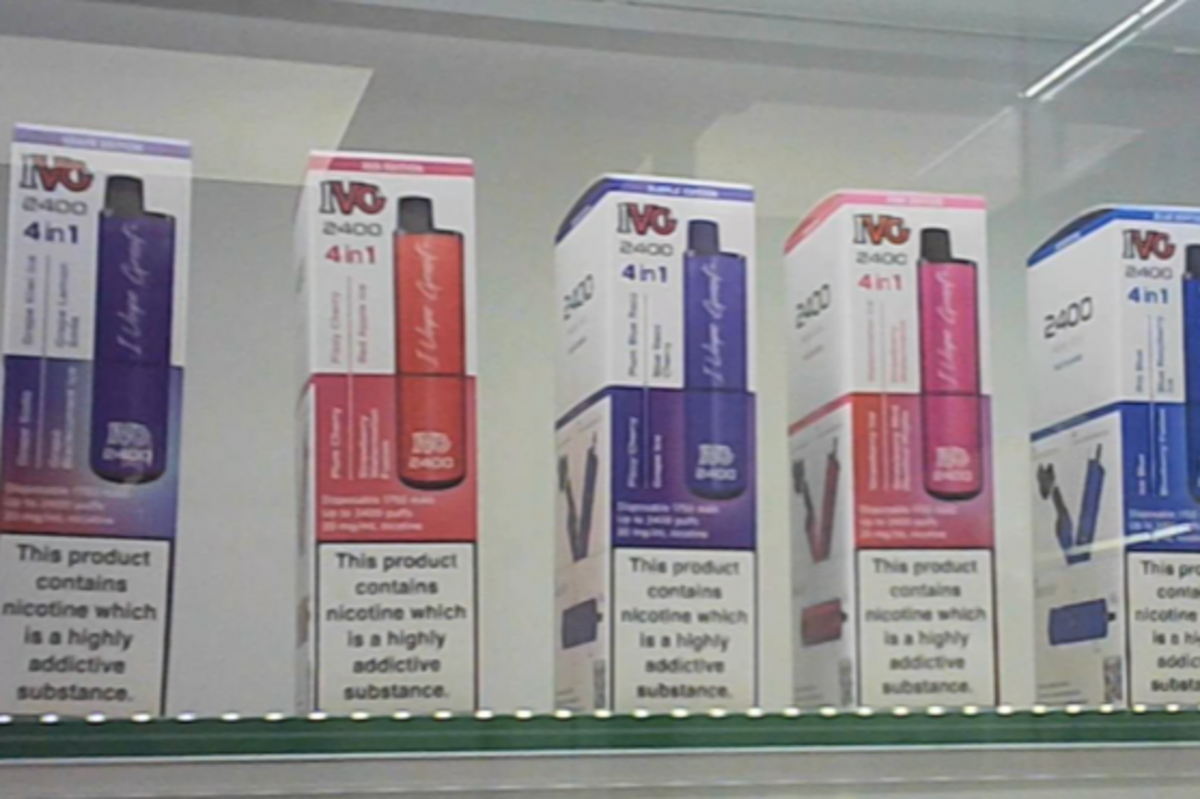
A hidden video of the sale of e-cigarettes shows safety warnings in English only. Our team found this in many of The stores we visited | Photograph: Maria Delaney/The Journal Investigates
A spokesman for The distributor of IVG e-cigarettes in Ireland, pictured above, told The Journal Investigates that "we are aware of the issue and have been fighting this with the Irish Health Service Executive for many years".
They also added that a "significant number" of e-cigarettes from the UK were being imported into Ireland "mainly through wholesalers in England" and that the issue affected "all major brands".
We asked the Irish Health Service Executive about this issue but did not receive a response by the time of publication.
While it is not illegal to import these e-cigarettes from the UK, they cannot be sold in Ireland unless they are repackaged to comply with Irish regulations. This includes warning labels on the boxes having to be in both Irish and English.
A spokesman for The Irish Health Service Executive told The Journal Investigates that "it is the responsibility of manufacturers and importers to ensure full compliance with all legislative requirements..." .
Retailers also have a responsibility to ensure that e-cigarettes sold "comply with the law," they added.
Of the e-cigarettes we bought, six were from Lost Mary and one from Elfbar, two of the most popular brands in Ireland, both owned by China's Shenzhen iMiracle Technology.
Only one of these products has the correct warning label, which is nothing more than a sticker on the box that covers the warning that was originally written only in English.
A spokesperson for Love Miracles, which represents The two e-cigarette brands, told The Journal Investigates that the products we purchased were "not authorised" to be sold in the Republic of Ireland market.
"Authorised products carry the Irish flag on the front of the package, Irish distributor details and safety warnings clearly printed in both Irish and English," they said.
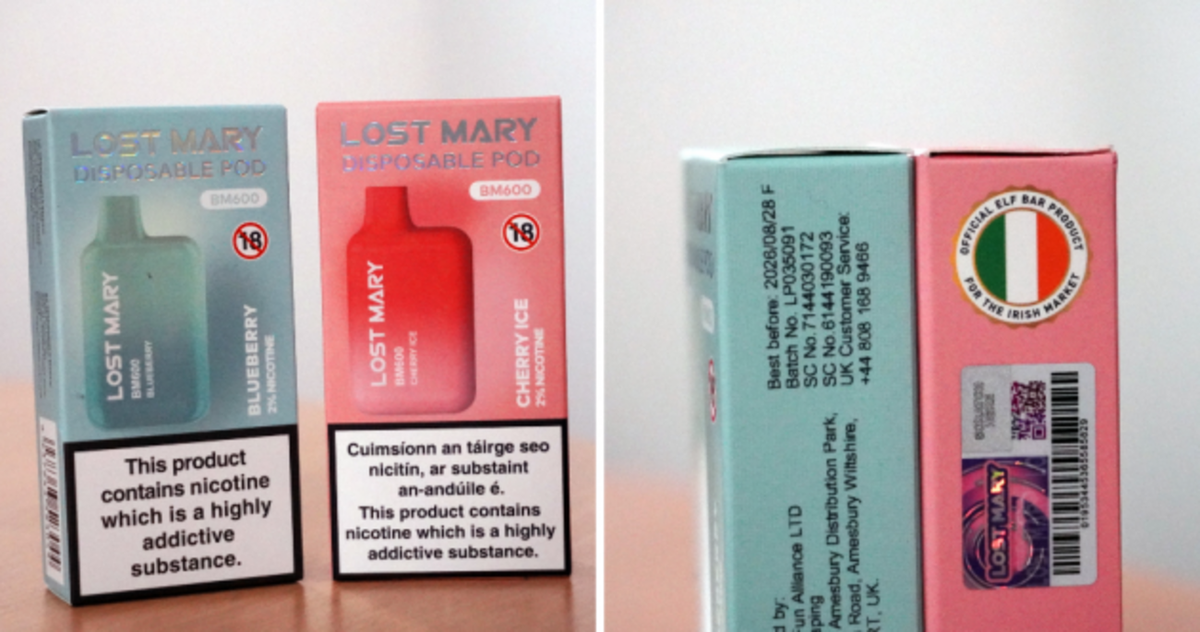
Imported Lost Mary e-cigarettes (green) alongside The 'authorised' Irish version (red) | Photograph: Nicky Ryan/The Journal Investigates
Our team found that these imported e-cigarettes were being sold in both mobile phone repair shops and e-cigarette specialty shops in Dublin.
Expired products and other violations
The five e-cigarettes purchased by our team have also exceeded the shelf life marked on the box for several months. One was purchased from a chain of e-cigarette boutiques with stores in Dublin and the east of Ireland.
Once a product passes its sell-by date, the e-liquid inside will begin to break down and may lose its potency and flavor. Due to a lack of research, it is unclear what the health effects of using expired e-cigarette products are.
However, Professor Donal O 'Shea told us that the use of these expired products "just adds more risks and unknowns to an already very, very dangerous situation," which he said was yet another example of the industry's unregulated nature.
Among the expired products sold to our team were Lost Mary and Elfbar. Both products were months out of date when they were sold to us.
A spokesman for Shenzhen-based Love Miracle Technology, which owns The two e-cigarette brands, told The Journal Investigates that retailers should "closely monitor inventory to make sure all products are within their expiration dates."
One of the stores that sold us expired e-cigarettes told us, "We don't sell expired products in our store."
The other store did not respond to multiple requests for comment.

Moore Street Market picture. Our undercover team bought e-cigarettes in December from a stall set up there | Credit: Alamy Stock Photo
Our team also found e-cigarette products for sale at a market stall on Moore Street.
After purchasing three e-cigarettes from the stall, our team found that they all expired in 2023. One of the e-cigarettes had a shelf life until March 2023, meaning it was 21 months past its expiration date when our team bought it.
Retailers will need to hold a license to sell e-cigarettes from 2026
Currently, no license is required to sell e-cigarettes, but that will change next year.
From February 2026, as part of a new licensing system, retailers will have to pay €800 a year to sell e-cigarettes and €1,000 to sell tobacco.
Since 2009, retailers selling tobacco in one or more stores have had to register with the Tobacco Control Office and pay a one-time application fee of €50. However, under the new licensing system, each premises must apply for an annual license from the National Environmental Health Service.
Shops selling e-cigarettes will also have to join the new registration system and be inspected by the Irish Health Service Executive to ensure compliance with the law. Licences will also not be issued for temporary or mobile premises, such as pop-up shops during festivals.
Retailers must renew their licenses annually, which means any retailer that illegally sells e-cigarettes or sells to people under the age of 18 could have their license revoked.
The new requirements were passed through a statutory instrument in the Irish Parliament last year and will be incorporated into the Public Health (Tobacco Products and Nicotine Inhalation Products) Bill 2023, which prohibits the sale of the products to people under the age of 18.
Retailers react: 'We threw it away'
Our team also found that some e-cigarette packages lacked the safety leaflets required by EU regulations.
The leaflet should contain storage and use instructions, warnings for specific risk groups, warnings about addiction and toxicity, and contact information for the manufacturer.
Two of these e-cigarettes were purchased from market stalls, but our team also bought e-cigarettes without safety flyers in physical stores.
One is the aforementioned "RandM Tornado 9000 Pro" and the other is the disposable e-cigarette "DejaVoo Fresh Cube".
When we contacted the owner to inquire about the sale, the owner told us that the product was removed from the shelves shortly after we purchased it.
A few weeks later, our team returned to the store. The product is no longer on display, but when we inquired, the clerk sold it to us from under the counter.
When we asked why the "DejaVoo" e-cigarette, which also had no product leaflet, was sold to us when we were told it was out of stock, the shop assistant told our undercover team: "Because you want it." The clerk then took the purchased e-cigarettes from our hands, along with other products placed under the counter, and threw them into a plastic bag in the corner of the store.
The store also displays and sells several different models of the "RandM Tornado 9000 Pro" and "Hayati Pro Max." As mentioned above, these e-cigarettes contain several times the legal limit of e-liquid.
When we contacted the owner about this, the owner apologized to our team, saying that the product should never have been sold and that he had told employees to throw it away when we initially contacted him.
He also told us that "RandM" and "Hayati" e-cigarettes will also be taken off the shelves and thrown away.
Bliz Electronics Limited, the British company listed on the packaging as the importer of the "DejaVoo" e-cigarette, did not respond to multiple requests for comment from our team.
Given that the e-cigarette also lacks an Irish-language safety warning, it may have been imported into the UK market from China, so it is unclear which company supplied the e-cigarettes to the Irish market.
Findings highlight 'lack of actual enforcement'
Mep Barry Andrews said the prevalence of illegal e-cigarettes highlighted the "lack of actual enforcement" by the Irish Health Service Executive at retail outlets, as well as "the lack of checks and regulation that should have existed".
He added that resources for environmental health inspectors in the Irish Health Service Executive should be increased to allow for more retail inspections.
Under the Irish Health Service Executive's National Plan 2024, a target of 40 planned inspections of e-cigarette manufacturers and distributors was set last year.
We asked the Irish Health Service Executive whether this target was met last year, but did not receive a response by the time of publication.
As part of the government's draft policy platform, the new government has promised to introduce "broad restrictions on e-cigarettes," including restrictions on packaging, taste, and a ban on the sale of single-use e-cigarettes.
A spokesperson for the Irish Department of Health also said that EU rules on e-cigarettes were "currently under review at EU level".
The Irish Health Service Executive has told us that members of the public who notice the mis-selling of e-cigarettes can report it to them by contacting their local environmental health office.


