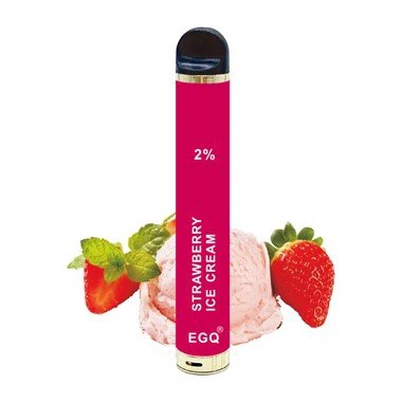
How to make your own vap
Leave a message
OK, homemade e-juice (also known as DIY e-liquid) does allow you to freely customize the flavor and nicotine concentration, offering a lot of fun for exploration. However, before you start, there are several important safety and compliance-related pieces of information that must be understood first.
⚠️ Critical Safety Warning: Please read this section first
Nicotine is highly toxic: Solutions with high concentrations of nicotine are extremely dangerous. When handling, be sure to wear nitrile gloves and safety goggles to prevent skin contact, and perform the operation in a well-ventilated area.
Keep away from children and pets: All raw materials, especially nicotine, must be stored in a place where children and pets cannot access.
Choose spices carefully: Please only use food-grade fragrances specifically designed for e-cigarettes or for baking. Do not use oil-based fragrances (such as essential oils). Inhaling oily substances may cause serious lung diseases.
Precise measurement, no guesswork: The amount of nicotine must be calculated precisely in milligrams. Any estimation could pose a danger.
Law and Health Risks: In China, the sale of e-cigarette products containing nicotine requires a tobacco专卖 license. The act of self-production is not protected by law and may expose oneself to legal risks. Additionally, the long-term health effects of e-cigarettes are not yet clear, and they are not completely harmless products.
After understanding and accepting these risks, we can then proceed to learn about the specific ingredients, tools and methods of DIY e-liquid.
?? 1. Core Ingredients
The ingredients of e-liquid are actually quite simple. They are mainly composed of the following four types of raw materials:
PG (Propylene Glycol): A colorless liquid, it serves as the main carrier of the flavor and can provide a sensation similar to that of smoking cigarettes.
VG (Vegetable Glycerin): A slightly sweet and viscous liquid that is responsible for generating a large amount of vapor (smoke).
Nicotine (optional): Choose to add it based on your needs. This is a component that requires extremely careful handling. For beginners, it is recommended to purchase a low-concentration nicotine solution or directly use a 0mg nicotine-free formula.
Food flavoring: The core ingredient that gives the e-liquid its flavor, must use water-soluble, oil-based food-grade flavoring.
??️ 2. Equipment and Tools
Having all the necessary tools prepared can make the production process more precise and safe.
Essential Tools:
Protective equipment: Nitrile gloves, goggles.
Measurement tools: Electronic scale (recommended) or a calibrated large-bore syringe.
Mixing container: Clean glass or plastic beaker, conical flask.
Storage bottle: Dark glass or high-density polyethylene plastic bottle, with dropper or tapered nozzle cap.
Tag: Used for marking the recipe and the date.
??‍🍳 3. Production Steps
The first step: Determine the recipe and proportions (the most time-consuming)
This is the core of the entire process. Make sure to use the DIY e-liquid calculator (you can search for "e-liquid recipe calculator" online). Just input the target total volume, the ratio of PG to VG, the nicotine concentration, and the fragrance ratio, and it will automatically calculate the required grams or milliliters for each ingredient. This is the key to an accurate formula.
Understanding the PG/VG ratio:
50% PG / 50% VG: The perfect choice for beginners, it strikes a balance between taste, throat hit and smoke volume, and is suitable for most small vaping devices.
30% PG / 70% VG: Advanced option, with a large amount of smoke and a smooth taste. Suitable for players who prefer strong smoke and devices with higher power.
Determine the nicotine concentration:
0 mg: Contains no nicotine, with a smooth taste.
3 - 6 mg: Commonly found in high-voltage vaping devices (Sub-ohm).
12 - 18 mg: Suitable for low-power devices, designed for heavy smokers.
24 - 36 mg: Extremely high concentration. Not recommended for beginners to try.
Note: All the calculated values are intended to achieve the desired safe concentration by diluting the high-concentration nicotine solution.
Determine the ratio of the fragrance:
The amount of flavoring agent usually accounts for 5% to 20% of the total formula. It is essential to start with the recommended low proportion from the manufacturer to avoid an overly strong flavor.
Step 2: Cleaning and Preparation
Wash all tools and containers thoroughly with soapy water and then dry them completely to prevent any impurities from contaminating them.
Step 3: Mixing and Measuring (Two Methods)
Method 1: Mix by weight (recommended): Place the empty bottle on an electronic scale and zero it out. Use a dropper to add the required fragrances, nicotine, PG, and VG in the formula separately. Zero the scale after each addition, and finally close the bottle cap.
Method 2: Volume-based Mixing (Suitable for Beginners): Use multiple syringes (to prevent cross-contamination), precisely follow the milliliter amounts calculated by the calculator, and successively draw the fragrance, nicotine, PG, and VG, and inject them into the mixing bottle.
Suggested order for addition: flavoring agent → nicotine → PG → VG. Since VG is viscous, adding it later will help better clean the container walls.
Step 4: Shaking and Maturation
Tighten the bottle cap and shake vigorously for at least 1-2 minutes until all the ingredients are fully combined and the liquid becomes slightly cloudy.
?? 4. Flavoring Techniques
Start with a single fruit flavor: For instance, begin with 10% strawberry essence and gradually increase or decrease the amount to find your personal preference.
Single small-scale preparation: Start by making a small batch of 10ml or 30ml for testing to avoid waste.
Make proper notes: Record the successful recipe, including the proportions and specific quantities.
⏳ 5. Maturation and Testing
Maturation: Some complex flavors (such as cream, baking, and tobacco) require a "maturation" process. After mixing, place the mixture in a cool, dark place for several days to several weeks. During this period, shake it daily and open the lid for a few minutes to allow air circulation.
Test: Use a clean atomizer for testing. If the taste is satisfactory, proceed with mass production; if not, make adjustments according to the taste preferences.
The taste is too weak: Add a small amount of flavoring.
The throat-stinging sensation is too strong: Increase the amount of VG appropriately.
Too sweet/tacky in taste: Add a small amount of PG to dilute it.
❓ 6. Common Issues and Adjustments
The taste is too weak: Add a small amount of flavoring agent (for example, add 2-3 drops in 10ml of the finished product), shake well and let it stand for one day before tasting again.
The taste is too strong: Add a little VG and a small amount of PG, shake well and leave it for a few days.
There is a burnt smell: This is usually not a problem with the e-liquid, but rather the atomizer needs to be replaced.
The oil is too thin or too thick: Add more VG (to thicken) or PG (to reduce thickness) appropriately.
To adjust the nicotine concentration: add nicotine solution (increase) or add more base liquid (decrease), and recalculate the ratio.
?? Summary
From the safest perspective, it is recommended to start with a 0mg nicotine formula, such as a simple 70% VG/30% PG and 10% strawberry flavor formula. This way, you can enjoy the DIY experience while minimizing the risks. At all times, safety comes first.