2Firsts Interview with Imperial Tobacco Scientists: Revealing Progress in Nicotine Bag Development, Suggesting Upgrading China's Supply Chain in Two Aspects
Leave a message
2Firsts Interview with Imperial Tobacco Scientists: Revealing Progress in Nicotine Bag Development, Suggesting Upgrading China's Supply Chain in Two Aspects

Dr. Erika Grandolfo, a scientist at Imperial Tobacco, was interviewed by 2Firsts to share the latest developments in Imperial Tobacco's nicotine bag products and the company's harm reduction strategy. At the same time, she also disclosed the details of Imperial Tobacco's Shenzhen Consumer Innovation Center and proposed two upgrade suggestions for the Chinese supply chain.
As more and more smokers seek safer alternatives, tobacco free nicotine bags (TFNPs) have received widespread attention as an effective tool for tobacco harm reduction (THR). In communication with two top 2Firsts, Dr. Erika Grandolfo, the scientific affairs manager of Imperial Tobacco, stated that the company's research on tobacco free nicotine bags such as ZoneX contains significantly fewer harmful chemicals compared to traditional tobacco products, and nicotine release is slower, reducing the risk of addiction while still meeting the needs of adult smokers.
Dr. Grandolfo also introduced Imperial Tobacco's significant investment in next-generation tobacco products (NGPs), including heated tobacco products and electronic atomization products. She emphasized that regulation based on scientific evidence is crucial, as it not only supports adult smokers in obtaining safer choices, but also helps prevent misuse by teenagers.

Dr. Erika Grandolfo | Source: Imperial BrandsScience
Tobacco free nicotine bags like zoneX contain significantly fewer harmful chemicals than the smoke produced by traditional tobacco combustion, and even much lower than traditional tobacco containing snus
You can design the safest harm reducing product in science, but if consumers don't choose it - then it won't have any effect on tobacco harm reduction
Policy formulation should always be based on rigorous scientific evidence, rather than emotional judgments
Regulators and policy makers should listen more to consumers' needs and truly understand how to better support and protect them, rather than simply telling them what to do
Tobacco free nicotine bags: providing a safer option for adult smokers
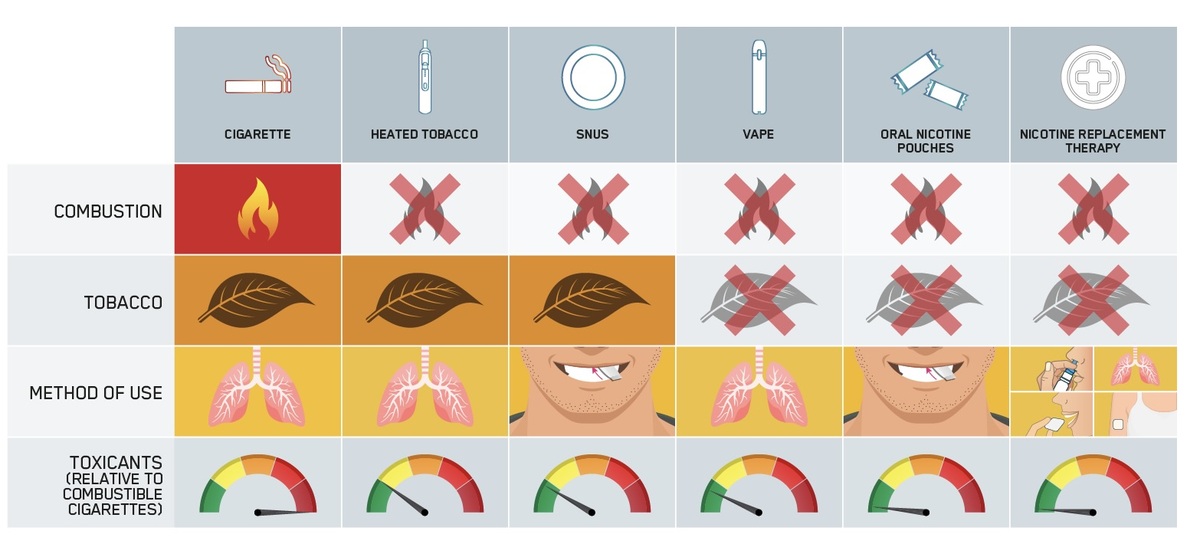
Scientific basis for relative risk ratio: product comparison based on combustion and toxicity levels. Image source: Imperial Brands Science
At the InterTabac exhibition held in Dortmund in October, the focus was on emerging products that reduce the risks of traditional tobacco use. Dr. Erika Grandolfo, the Scientific Affairs Manager of Imperial Tobacco, emphasized the innovative significance of nicotine free bags in the field of tobacco harm reduction.
Imperial Tobacco is committed to proving the harm reducing potential of tobacco free nicotine bags through continuous accumulation of scientific evidence, "she said." Our products, such as zoneX, contain fewer and lower levels of harmful chemicals compared to the smoke produced by traditional tobacco combustion and traditional snuff.
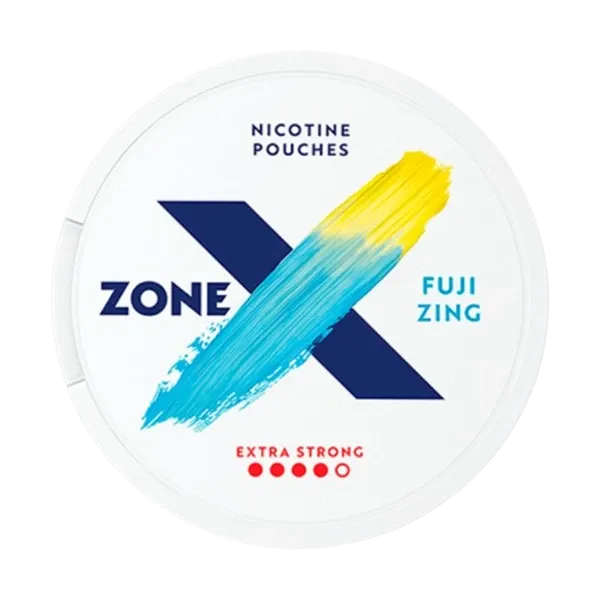
ZoneX Nicotine Bag | Image source: All White Online
Imperial Tobacco's research shows that in laboratory studies, the biological reactions triggered by tobacco free nicotine bags are milder than tobacco product smoke, indicating that the use of tobacco free nicotine bags may bring lower overall health risks. Although tobacco free nicotine bags can still deliver nicotine to the bloodstream through the oral mucosa, their release process is slower and less intense than smoking.
This indicates that compared to traditional tobacco products, the risk of abuse of tobacco free nicotine bags is lower - although this does not mean that zoneX is not addictive, "said Dr. Grandolfo.
From a practical application perspective, tobacco free nicotine bags provide a satisfactory alternative for adult smokers who wish to reduce or quit smoking. In the short term, it demonstrated good safety and tolerability, and no serious product related adverse reactions were observed in controlled clinical trials, "said Dr. Grandolfo.
It is worth noting that the appeal of tobacco free nicotine bags is mainly concentrated among adult smokers, with lower interest among non-smokers, which also helps alleviate people's concerns about accidental use.
The science driven harm reduction strategy of the Imperial brand
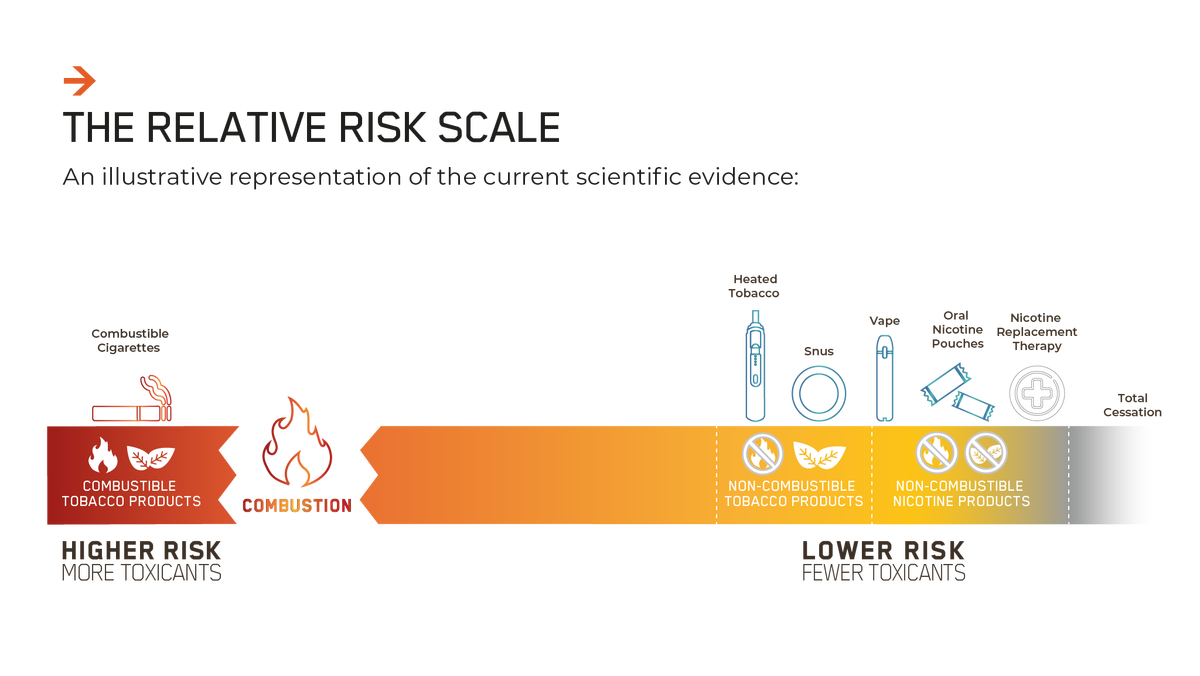
Relative risk ratio: Compare combustible tobacco with non combustible alternatives. Image source: Imperial Brands Science.
Dr. Grandolfo introduced the extensive research of Imperial Tobacco on the next generation of tobacco products, including heated tobacco products, electronic atomization products, and tobacco free nicotine bags. These products are an important component of the company's commitment to providing safer alternatives to traditional tobacco and helping smokers reduce health risks.
Imperial Tobacco always puts consumers at the core. They are the starting point of all our work. After all, even if you create the safest harm reducing product in science, if consumers do not choose it, then it cannot have any effect on tobacco harm reduction, "said Dr. Grandolfo.
To this end, Imperial Tobacco has developed a series of next-generation tobacco products that can simulate the smoking experience while avoiding the harmful effects of tobacco burning. These products undergo strict safety and quality control to ensure they meet high standards.
One of the core tasks of the company in this area is the "Scientific Assessment Framework" (SAF), a multidisciplinary assessment system. The scientific evaluation framework evaluates the next generation of tobacco products in multiple key areas, including product features, bioscience, clinical trials, behavioral science, computational science, and post market monitoring. The results of each study together form a solid evidence foundation to support the potential harm reduction of the next generation of tobacco products.
In addition, Dr. Grandolfo introduced the "Relative Risk Ratio" (RRS) developed by the company, which is a tool to showcase the risk differences between various nicotine products and traditional tobacco products.
The relative risk ratio reveals significant differences between high-risk tobacco products and other nicotine products that do not involve tobacco burning, and the health risks of these non burning products may be significantly reduced, "she said.
Risk proportion based regulation is crucial for reducing tobacco harm

Scientific evaluation framework: the safety evaluation stage from product features to post market monitoring. Image source: Imperial Brands Science.
According to Dr. Grandolfo, tobacco harm reduction is not just a theoretical concept, but a validated public health strategy. The actual case of Sweden successfully reducing smoking rates and related diseases through the promotion of snus is evidence. However, she pointed out that Sweden's success has not been fully recognized by regulatory agencies, public health institutions, and the media.
Policies should always be based on rigorous scientific evidence rather than emotional judgments, "said Dr. Grandolfo.
She explained that risk-based regulation is crucial to ensure the differentiation between low-risk products (such as nicotine bags without tobacco) and traditional tobacco products, and advertising regulations and tax policies should reflect the lower health risks of non combustible products.
Meanwhile, she emphasized that marketing must responsibly target adult smokers and strictly avoid attracting teenagers.
Dr. Grandolfo also pointed out that ensuring product quality and conducting responsible marketing throughout the industry are crucial. She called for strengthened cooperation to prevent substandard equipment, adulterated electronic liquids, and unethical marketing practices, which could undermine the overall goal of harm reduction.
Regulators and policy makers should listen more to consumers' needs and truly understand how to better support and protect them, rather than simply telling them what to do, "she added.
Long term data support is urgently needed for the research of next-generation tobacco pest reduction products
Despite significant progress in the research of next-generation tobacco products, Dr. Grandolfo acknowledges that significant challenges still exist. Since 2010, there have been over 10000 scientific studies on electronic cigarettes, most of which have confirmed their potential to reduce harm compared to traditional tobacco.
However, she pointed out that "there are still some studies that only focus on the absolute risk of non-smokers, rather than the relative risk compared to continued smoking
One of the main obstacles is the lack of long-term epidemiological data. Although this is a challenge, Dr. Grandolfo also mentioned empirical data from some countries, such as Sweden, Japan, and New Zealand, which have successfully reduced smoking rates through snuff and heated tobacco products.
She also emphasized Imperial Tobacco's commitment to continuous research and innovation. She mentioned a recent behavioral study conducted in the Czech Republic, which showed that Empire Tobacco's PULZE and iD heated tobacco systems helped significantly reduce adult smokers, and even completely switch to tobacco free products.
Suggestions on Strengthening the Supply Chain of China's Next Generation Tobacco Products

The Imperial Tobacco team took a photo at the Shenzhen Consumer Innovation Center. Image source: Imperial Brands Science
China plays a key role in the global supply chain of next-generation tobacco products, and Imperial Tobacco is investing heavily to meet the constantly changing needs of consumers.
Dr. Grandolfo emphasized the importance of China in this ecosystem, especially the company's recently established Consumer Innovation Center in Shenzhen. This center enables Imperial Tobacco to collaborate closely with local partners and accelerate the development of new products.
However, Dr. Grandolfo also pointed out the room for improvement in China's next-generation tobacco product supply chain.
She said, "Regarding the improvement of China's next generation tobacco product supply chain, we suggest using more widely certified (ISO17025) laboratories for independent testing. This will undoubtedly help provide more reliable test results to regulatory agencies
Bridge the gap in scientific communication and promote tobacco harm reduction
In terms of the dissemination of research results, Dr. Grandolfo emphasized that accurate and consistent scientific research dissemination is crucial for promoting tobacco harm reduction.
She pointed out that there is often a lack of consistency between the industry, regulatory agencies, and public health institutions, which increases the difficulty of widely disseminating research results on next-generation tobacco products.
To ensure transparency, she said, "We always welcome criticism and suggestions from the outside world about our scientific work through peer review in scientific journals, regular presentation of research results at international conferences such as InterTabac, and public disclosure of all research on our dedicated scientific website www.imperialbrandsscience.com
Cover image source: Bloomberg